Alzheimer's Disease & Cognitive Decline
Alzheimer’s Disease (AD) is the most common form of dementia, affecting memory, thinking, behavior and other cognitive abilities that worsen over time, impacting daily life. Alzheimer’s disease is mostly in individuals over the age of 65 years old, but can be found in younger individuals as early-onset Alzheimer’s. It is the sixth leading cause of death in the United States with no current cure.
 What Causes Alzheimer’s Disease

Alzheimer’s occurs when synapses in the brain’s neurons, its nerve cells, are destroyed by amyloid plaques, along with “tangles” in the cells that lead to loss of brain function. This leads to the progressive deterioration of memory and can cause behavioral issues like aggression, hallucinations, delusion or daily activities such as conversation.
However, Alzheimer’s and cognitive decline are not sudden events. More and more studies show that they are the result of years of biological change, often involving inflammation, immune activation, vascular dysfunction, and metabolic stress.
Risk Factors for Alzheimer’s Disease and Dementia
- Diabetes: Alzheimer’s disease is sometimes called “type 3 diabetes,” as type 2 diabetes and prediabetes are strongly linked to Alzheimer’s due to insulin resistance. Excess sugar consumption causes the pancreas to outpour insulin, which creates insulin resistance. Insulin is critical for brain function, and the elevated sugar levels damages blood vessels and impairs the brain, kidneys, eyes and peripheral nerves. The good news is diabetes is a preventable risk factor for dementia.
- Environmental Factors: Preventable, environmental factors also contribute to an increased chance of developing Alzheimer’s, such as:
- Heavy metals (cadmium, arsenic, lead, mercury, manganese). These can be from contaminated food, water, pollution, pesticides
- Mold (damages the nervous system), which can be found in water-damaged buildings
- Other Factors:
- Recurrent traumatic brain injury (concussions)
- Infections like Lyme disease and syphilis
- Excess alcohol and drugs
- Prolonged general anesthesia
- Sleep apnea
- Genetics: There are several genes that can predispose to Alzheimer’s, such as the ApoE4. However, having a particular gene doesn’t mean it will be expressed. Lifestyle factors can help determine how genes are expressed.
Diagnosing Alzheimer’s and Cognitive Decline
Losing cognitive ability can be terrifying, but thankfully, diagnostics have drastically improved over the years. We are now able to detect the risk of Alzheimer’s about 15 years before any symptoms appear, which means we can now intervene earlier to deter degeneration. (see chart below).
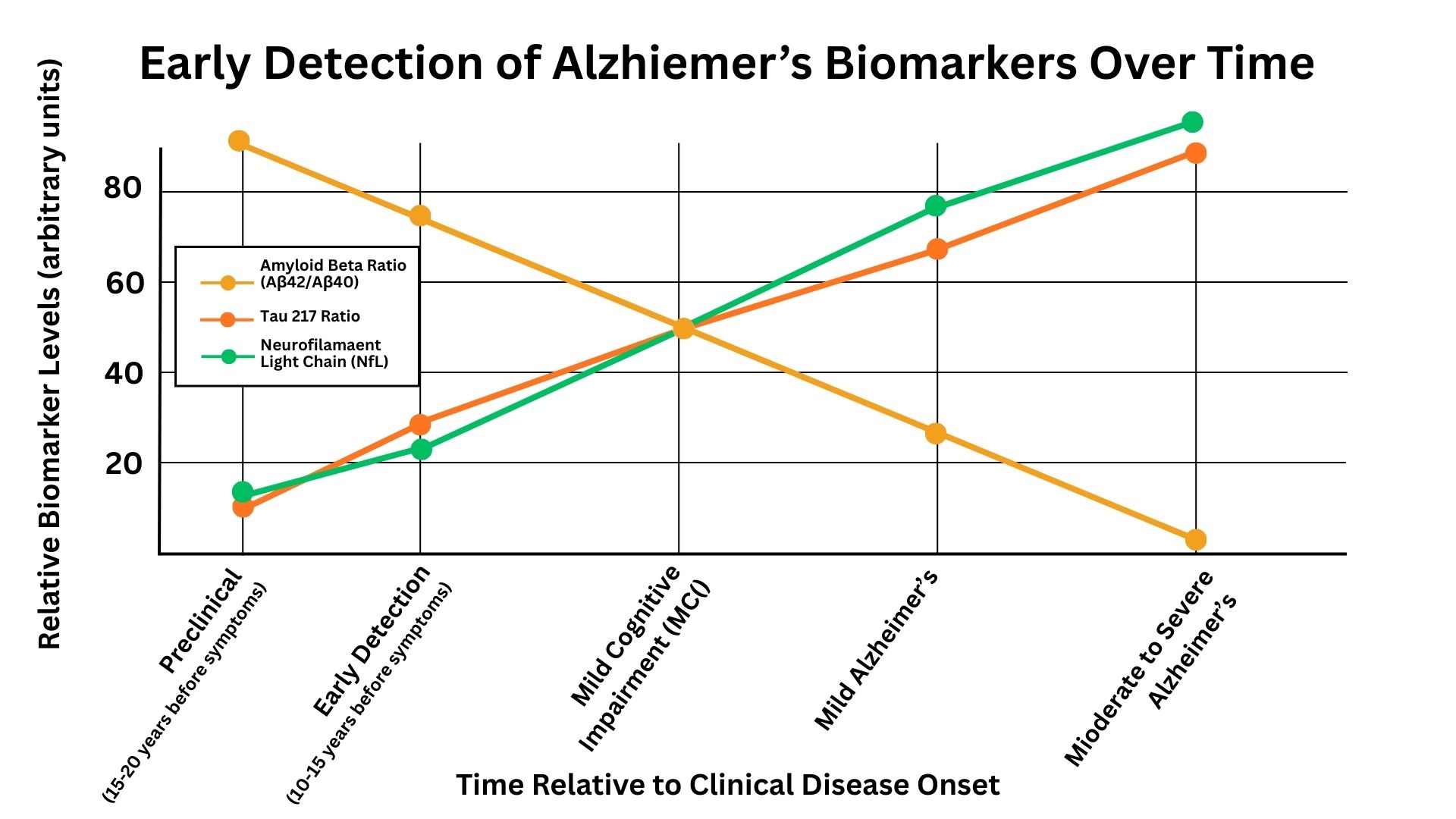
The chart above displays the typical progression of Alzheimer’s disease biomarkers over time (up to 15-20 years before symptoms) we are able to detect, relative to the onset of clinical symptoms.
We use a combination of tools for cognitive testing to determine diagnosis:
- BrainCheck Assessment: BrainCheck is an FDA-cleared, digital neurocognitive platform used by clinicians to determine brain health, memory, and cognitive function. Patients take a 15 minute online test that can be taken in our clinic or remotely to detect any signs of impairment or dementia. This tool gives us a picture of the current state of your brain that we use along with our other labs and treatment options.
- Brain Age Evaluation: Brain Age assessments use a combination of genetic, metabolomic and proteomic testing to provide a comprehensive approach to measure biological aging in the brain and its deviation from your actual age, known as your “brain age gap” (BAG). These techniques are used to identify early signs of neurodegenerative diseases before symptoms appear, like Alzheimer’s and overall cognitive decline.
- MRI scan analysis: Brain age is most commonly calculated with machine learning models that analyze MRI scans to detect degenerative changes, such as decreased gray matter volume, reduced cortical thickness.
- Genetic testing: Genetic testing provides context for the underlying risk and rate of aging. This is done with APOE genotyping, analyzing polygenic risk scores and genetic susceptibility.
- Metabolomic testing: Metabolites are small organic molecules produced during metabolism, such as lipids, amino acids, or sugars. Certain plasma metabolites have been shown to be associated with a brain age gap, which are analyzed along with any metabolic changes in the body that could indicate neurodegenerative disease progression.
- Proteomic testing: Proteomic testing examines proteins in blood plasma or cerebrospinal fluid (CSF) to find molecular changes that could indicate irregular brain aging.
Treatment Options for Alzheimer’s and Cognitive Decline
Alzheimer’s Disease and early cognitive decline are often the result of chronic inflammation, immune dysregulation, and systemic stress that has already existed in the body. For decades, our work’s focus has been identifying and treating these exact processes. We are able to address your entire health history, including issues stemming from factors like heavy metals and mold toxins that may have led to chronic inflammation in your brain.
At the Kaplan Clinic, we combine our deep expertise in inflammatory conditions with access to advanced therapies that are still not widely available, such as therapeutic plasma exchange (TPE) and next-generation biologics.
- Therapeutic Plasma Exchange: Therapeutic Plasma Exchange (TPE), also known as plasmapheresis, removes harmful substances from blood plasma and replaces it with clean, nutrient-rich fluid to reduce inflammation at a cellular level. Studies have shown stopping of Alzheimer’s in patients with moderate to severe symptoms. We are currently the first and only outpatient practice in the area that offers this revolutionary treatment for Alzheimer’s.
- TrueBinding TB006: TB006 is a potentially revolutionary drug for Alzheimer’s disease. It is currently FDA-approved for an Expanded Access Program, giving Alzheimer’s patients early access to this treatment. Studies have shown TB006 to slow Alzheimer’s progress by significant reduction in neurodegeneration biomarkers. TB006 blocks a key protein, Galectin-3 (Gal3), which shows up in high levels for AD patients. Alzheimer’s is highly comprised of amyloid-beta proteins that bind and become toxic plaques. Gal3 attaches to amyloid-beta and
worsens Alzheimer’s symptoms.
These therapies are available through compassionate use, allowing us to offer these options that are still usually reserved for research or specialty settings. The FDA is currently continuing to monitor these treatments for potential wider access.
At the Kaplan Center, our cognitive health treatment pathway focuses on:
- Early identification of risk and disease activity
- Comprehensive evaluation beyond brain testing alone
- Addressing all potential contributors to neurodegeneration
- Supporting patients and families across their healing journey
Alzheimer’s no longer has to feel like a losing battle. The key is for us to detect risk as early as possible. We integrate advanced diagnostics with personalized care plans to help slow progression, preserve function, and improve quality of life wherever possible.
We are here for you, and we want to help.
Our goal is to return you to optimal health as soon as possible. To schedule an appointment please call: 703-532-4892 x2