A new study suggests that Long COVID may affect more than twice as many people as medical records indicate, leaving many patients struggling to access the care and support they need. In discussing the findings with Bloomberg Law, Dr. Gary Kaplan highlights significant barriers to accessing treatment and long-term recovery.
A new study estimates that long Covid is underrepresented in medical records, illustrating documentation issues affecting medical research, insurance coverage, and patient care.
The study, published in the Journal of the American Medical Association, found that roughly 16% of people with Covid-19 developed long Covid, more than double the 7% identified by the condition’s diagnosis code.
The researchers developed an AI algorithm—which demonstrated an 80% accuracy rate in a previous study—to search medical records of nearly 458,000 Covid patients across 58 hospitals around the US, identifying long Covid symptoms not explained by pre-existing conditions.
The data signal how the chronic burden of Covid-19 plagues patients fighting for recognition and answers from doctors, insurers, and researchers, six years after the virus emerged. There is broad recognition that long Covid’s diagnosis code is underused, which translates to more hurdles for patients, scarcer data for researchers, and less evidence for insurers making coverage decisions.
Diagnosis codes are used to document patient conditions in medical records and bill insurance companies for treatment. Detailed medical records are critical for obtaining coverage for care and disability insurance, and an official diagnosis is often needed to gain admittance to specialty long Covid clinics. But there is no dedicated treatment for long Covid, and doctors say it can be difficult to get covered.
One reason the diagnosis is not well captured is because insurers are more likely to deny it, said Gary Kaplan, who treats long Covid patients as founder of the Kaplan Center for Integrative Medicine.
“Especially if we’ve got somebody who’s going to go on disability, they would be much more accepting of an ME-CFS [Myalgic Encephalomyelitis/Chronic Fatigue Syndrome] diagnosis,” he said.
Dozens of long Covid patients have sued insurers for denying disability claims, facing down a system courts have repeatedly criticized, according to a recent Bloomberg Law analysis. Coverage depends on indisputable evidence in the medical records, which is difficult to achieve for a new, misunderstood condition like long Covid.
Identifying Long Covid
“What our paper shows is that the objective markers exist. They’re just sitting in the wrong layer of the medical record,” said Hossein Estiri, associate professor at Harvard Medical School and co-author of the study.
Insurers can now use the algorithm, which is public, to better identify long Covid patients, Estiri said. If they continue denying legitimate claims, “they’re basically ignoring the clear longitudinal data patterns that our AI identifies.”
“The legal and insurance systems are using the dimmest possible lens and then citing the dimness as evidence the disease isn’t there,” he said.
Insurance lobbying group AHIP previously collaborated with the Health Care Cost Institute on a similar 2023 study that found 1 in 4 Covid patients suffered long Covid symptoms, and that spending on those patients was five times higher.
“As this condition becomes better understood clinically, plans are constantly assessing best practices regarding coverage using evidence-based criteria,” the group said in a statement.
Julia Moore Vogel, who leads long Covid trials as senior director at the Scripps Research Translational Institute—and has long Covid herself—said the patient community often discusses how difficult it is to prove disability.
“It’s easier in a lot of cases to get the right to die approval than it is to get the disability support,” she added. “And it’s just like, what are we even doing as a society?”
Providers also don’t use the long Covid diagnosis code because there are no treatments for which to bill. Researchers are working to change that.
“The day that we have one of those, then it’s going to become very important to have it in your chart,” Vogel said.
Access Hurdles
Patients can wait years for a diagnosis as they navigate medical theories and skepticism from doctors with varying experience with the condition.
Julie Lam, a writer, marketing professional, and community representative for the National Institutes of Health’s Covid-19 RECOVER initiative, suffered from long Covid for three years before receiving her diagnosis in January.
“I finally can lift up my head and walk into my doctor’s office and say, I am clinically diagnosed with long Covid,” said Lam, whose symptoms include POTS and fibromyalgia-like pain that her doctors initially attributed to stress. “And so let’s talk about how I can get better instead of still going around with this diagnosis of exclusion.”
It took six years for Vogel to receive a long Covid diagnosis for her migraines and chronic fatigue, partly because she didn’t test positive for Covid-19 until she was reinfected. The study’s methodology was smart, she said, but could be limited based on how many people lacked a positive test result from the early days of the pandemic.
It could also be conservative because it excluded pre-existing conditions. Evidence exists that the virus can trigger conditions that a person was already genetically at risk for, Kaplan said. He pointed to his wife, who developed Alzheimer’s after her bout with Covid-19.
“The bug may have been the last thing in the game of Jenga,” he said, “where you pulled the last brick out and the whole thing toppled.”
The virus reactivates pre-existing conditions too, Lam said. Both her father and his wife died, she said, after Covid resuscitated cancer from which they had been in longtime remission. Lam was blocked from a study because she has a kidney condition that long Covid aggravated.
Excluding long Covid from medical records only worsens the fragmentation of care, Kaplan said.
“We’re too busy treating the symptoms and not understanding the underlying path of physiology,” he said. “That leaves people sick, that leaves people undertreated, and that leaves people disabled.”
The cumulative number of long Covid cases is also increasing, according to the study, which Vogel said is “exactly what we expect.”
“Yeah, we know you had three Covid infections and you’re OK, but you don’t know what’s going to happen on the next one.”
We are here for you, and we want to help.
Our goal is to return you to optimal health as soon as possible. To schedule an appointment please call: 703-532-4892 x2
A mild winter and rising temperatures have created ideal conditions for ticks in Northern Virginia, increasing the risk of Lyme disease and other tick-borne illnesses. Dr. Gary Kaplan explains why the greatest risk may be closer than you think—right at the edge of your backyard—and shares key symptoms, prevention strategies, and the importance of early detection.
Northern Virginia residents should brace for a surge in Lyme disease and other tick-borne illnesses as warmer weather and a mild winter create ideal conditions for ticks.
“This year we didn’t have a really severe winter,” McLean-based Dr. Gary Kaplan told InsideNoVa this week. “The ticks arrive, and the nymphs, in particular the newborn immature ticks, are the ones that can do the most damage in terms of spreading the disease. They are thriving right now.”
Those nymph-stage ticks are so small that people often never see them.
Keep watching
“The problem with the nymphs is … they’re little dots that look like a speck of dirt,” Kaplan said. “There’s a high probability of not seeing them, so that’s why [you] take extra precautions.”
Backyard risk
Northern Virginia is a Lyme-endemic area with a “very high concentration of ticks,” Kaplan said, adding that residents don’t need to head deep into the woods to be exposed.
“You don’t have to go hiking on the Appalachian Trail to get Lyme disease, as what a lot of people think,” he said. “The highest risk, especially in this area, [is] at the edge of most people’s backyards.”
He pointed to the region’s sizable deer and white-footed mouse populations as key drivers.
“Those are the creatures that carry Lyme disease and spread it,” Kaplan said. “So, combination of the relatively mild winter, very high concentration of ticks already in the area, and then lots of opportunities for the ticks to come in contact with people.”
Ticks typically wait on tall grass or brush at the edge of yards before latching on.
“Ticks are hitchhikers,” he said. “They climb out the edge, tall grass, and they’ll hop onto you.”
How to lower risk
Kaplan urged homeowners to manage their yards and take basic personal precautions.
“In and around the house, I would make sure that I don’t put wood piles next to the house … because ticks like moist, dark areas,” he said.
Kaplan recommends laying mulch or gravel between lawns and tree lines, using tick repellent such as DEET, considering tick-repellent clothing and wearing light-colored clothes to make ticks easier to spot.
“When you get inside, do a tick check, and you need to look in places where you wouldn’t necessarily think,” Kaplan added, noting behind the knees and around the waistband as common hiding spots. Showering after gardening or yard work can also help remove ticks.
“There’s lots you can do to protect yourself,” he said, “but you’ve got to be cautious, and you’ve got to be attentive.”
Unexpected symptoms
One of the biggest challenges is that early tick-borne illness often looks like something else.
“If you feel like you’ve got a flu in the middle of July, high on your list should be a tick-borne illness,” he said.
Lyme disease can start with fatigue, headache, low-grade fever, neck stiffness and other flu-like complaints. Other tick-borne infections, such as Bartonella, can bring additional neurological symptoms, swollen lymph nodes, purple stretch-mark-like rashes, night sweats and “air hunger,” according to Kaplan.
“You have to think in terms of the fact that many ticks carry multiple diseases, not just one,” Kaplan said. “These different kind of presentations [require a] high index of suspicion in order to be able to diagnose.”
One classic Lyme symptom, the bullseye rash, while a significant indicator to look for, is not always present.
“That bullseye rash only appears in about 25 [to] 30% of people, and it’s not necessarily a classic bullseye,” Kaplan said. “It may look like a bruise, it may look like just a red area. Then it goes away.”
Sudden onset of facial nerve paralysis should also prompt immediate concern.
“Bell’s palsy is a classic symptom of Lyme disease,” he said. “Seeing that kind of a symptom, [you should] immediately think about Lyme disease.”
Chronic Lyme
If Lyme disease is missed or not fully treated, Kaplan said it can progress to chronic disease with serious, lasting consequences.
Over time, patients can develop severe fatigue, brain fog, difficulty concentrating, neck stiffness and joint pain that moves around the body. In later stages, Lyme disease can affect the heart and nervous system.
“Chronic Lyme can be quite devastating and have a lot of severe consequences,” Kaplan said. He added that Lyme getting into the brain can lead to seizures and debilitating headaches.
Most tick-borne diseases are treated with antibiotics, but the specific medication depends on the organism, he said.
Kaplan also warned that some patients and clinicians place too much confidence in early negative test results.
“If you test too soon, you’re going to miss the disease,” he said. “It takes two to three weeks, four weeks before the testing we do is positive, because the testing is based on the immune system’s response to the disease.”
For patients who develop the characteristic bullseye rash, he said, doctors should not wait.
Kaplan said people in Northern Virginia need to recognize the risk and act quickly when symptoms appear.
“Have a high index of suspicion,” he said. “People need to think about this disease.”
A mild winter and rising temperatures have created ideal conditions for ticks in Northern Virginia, increasing the risk of Lyme disease and other tick-borne illnesses. Dr. Gary Kaplan explains why the greatest risk may be closer than you think—right at the edge of your backyard—and shares key symptoms, prevention strategies, and the importance of early detection.
We are here for you, and we want to help.
Our goal is to return you to optimal health as soon as possible. To schedule an appointment please call: 703-532-4892 x2
In this video, Dr. Kaplan explains the science behind ME/CFS, including why patients experience debilitating fatigue, post-exertional malaise (PEM), brain fog, non-restorative sleep, and flu-like symptoms that can persist for years.
He explores how dysfunction in the immune system, nervous system, and cellular energy production may contribute to this complex condition—and why so many patients are often misunderstood or misdiagnosed.
You’ll learn:
✔ What ME/CFS is and how it differs from ordinary fatigue
✔ Why post-exertional malaise (PEM) is a defining symptom
✔ The role of neuroinflammation and the “brain on fire” phenomenon
✔ How mitochondrial dysfunction may contribute to profound exhaustion
✔ Why brain fog occurs and what it may reveal about the condition
✔ The connection between ME/CFS and viral triggers such as Epstein-Barr virus, Lyme disease, and Long COVID
✔ Why traditional approaches sometimes fall short
✔ Integrative and emerging approaches being explored for ME/CFS treatment
Dr. Kaplan also discusses the overlap between ME/CFS and fibromyalgia, a condition that shares some biological mechanisms but has its own unique features.
We are here for you, and we want to help.
Our goal is to return you to optimal health as soon as possible. To schedule an appointment please call: 703-532-4892 x2



















New Research Reveals Long COVID Is Being Significantly Underreported
/in COVID-19, Featured Press, Long Covid/by Kaplan CenterA new study suggests that Long COVID may affect more than twice as many people as medical records indicate, leaving many patients struggling to access the care and support they need. In discussing the findings with Bloomberg Law, Dr. Gary Kaplan highlights significant barriers to accessing treatment and long-term recovery.
Long Covid Underdiagnosis Poses Broader Care, Coverage Hurdles
by Lauren Clason, Bloomberg Law
A new study estimates that long Covid is underrepresented in medical records, illustrating documentation issues affecting medical research, insurance coverage, and patient care.
The study, published in the Journal of the American Medical Association, found that roughly 16% of people with Covid-19 developed long Covid, more than double the 7% identified by the condition’s diagnosis code.
The researchers developed an AI algorithm—which demonstrated an 80% accuracy rate in a previous study—to search medical records of nearly 458,000 Covid patients across 58 hospitals around the US, identifying long Covid symptoms not explained by pre-existing conditions.
The data signal how the chronic burden of Covid-19 plagues patients fighting for recognition and answers from doctors, insurers, and researchers, six years after the virus emerged. There is broad recognition that long Covid’s diagnosis code is underused, which translates to more hurdles for patients, scarcer data for researchers, and less evidence for insurers making coverage decisions.
Diagnosis codes are used to document patient conditions in medical records and bill insurance companies for treatment. Detailed medical records are critical for obtaining coverage for care and disability insurance, and an official diagnosis is often needed to gain admittance to specialty long Covid clinics. But there is no dedicated treatment for long Covid, and doctors say it can be difficult to get covered.
One reason the diagnosis is not well captured is because insurers are more likely to deny it, said Gary Kaplan, who treats long Covid patients as founder of the Kaplan Center for Integrative Medicine.
“Especially if we’ve got somebody who’s going to go on disability, they would be much more accepting of an ME-CFS [Myalgic Encephalomyelitis/Chronic Fatigue Syndrome] diagnosis,” he said.
Dozens of long Covid patients have sued insurers for denying disability claims, facing down a system courts have repeatedly criticized, according to a recent Bloomberg Law analysis. Coverage depends on indisputable evidence in the medical records, which is difficult to achieve for a new, misunderstood condition like long Covid.
Identifying Long Covid
“What our paper shows is that the objective markers exist. They’re just sitting in the wrong layer of the medical record,” said Hossein Estiri, associate professor at Harvard Medical School and co-author of the study.
Insurers can now use the algorithm, which is public, to better identify long Covid patients, Estiri said. If they continue denying legitimate claims, “they’re basically ignoring the clear longitudinal data patterns that our AI identifies.”
“The legal and insurance systems are using the dimmest possible lens and then citing the dimness as evidence the disease isn’t there,” he said.
Insurance lobbying group AHIP previously collaborated with the Health Care Cost Institute on a similar 2023 study that found 1 in 4 Covid patients suffered long Covid symptoms, and that spending on those patients was five times higher.
“As this condition becomes better understood clinically, plans are constantly assessing best practices regarding coverage using evidence-based criteria,” the group said in a statement.
Julia Moore Vogel, who leads long Covid trials as senior director at the Scripps Research Translational Institute—and has long Covid herself—said the patient community often discusses how difficult it is to prove disability.
“It’s easier in a lot of cases to get the right to die approval than it is to get the disability support,” she added. “And it’s just like, what are we even doing as a society?”
Providers also don’t use the long Covid diagnosis code because there are no treatments for which to bill. Researchers are working to change that.
“The day that we have one of those, then it’s going to become very important to have it in your chart,” Vogel said.
Access Hurdles
Patients can wait years for a diagnosis as they navigate medical theories and skepticism from doctors with varying experience with the condition.
Julie Lam, a writer, marketing professional, and community representative for the National Institutes of Health’s Covid-19 RECOVER initiative, suffered from long Covid for three years before receiving her diagnosis in January.
“I finally can lift up my head and walk into my doctor’s office and say, I am clinically diagnosed with long Covid,” said Lam, whose symptoms include POTS and fibromyalgia-like pain that her doctors initially attributed to stress. “And so let’s talk about how I can get better instead of still going around with this diagnosis of exclusion.”
It took six years for Vogel to receive a long Covid diagnosis for her migraines and chronic fatigue, partly because she didn’t test positive for Covid-19 until she was reinfected. The study’s methodology was smart, she said, but could be limited based on how many people lacked a positive test result from the early days of the pandemic.
It could also be conservative because it excluded pre-existing conditions. Evidence exists that the virus can trigger conditions that a person was already genetically at risk for, Kaplan said. He pointed to his wife, who developed Alzheimer’s after her bout with Covid-19.
“The bug may have been the last thing in the game of Jenga,” he said, “where you pulled the last brick out and the whole thing toppled.”
The virus reactivates pre-existing conditions too, Lam said. Both her father and his wife died, she said, after Covid resuscitated cancer from which they had been in longtime remission. Lam was blocked from a study because she has a kidney condition that long Covid aggravated.
Excluding long Covid from medical records only worsens the fragmentation of care, Kaplan said.
“We’re too busy treating the symptoms and not understanding the underlying path of physiology,” he said. “That leaves people sick, that leaves people undertreated, and that leaves people disabled.”
The cumulative number of long Covid cases is also increasing, according to the study, which Vogel said is “exactly what we expect.”
“Yeah, we know you had three Covid infections and you’re OK, but you don’t know what’s going to happen on the next one.”
We are here for you, and we want to help.
Our goal is to return you to optimal health as soon as possible. To schedule an appointment please call: 703-532-4892 x2
Dr. Kaplan Explains Why Lyme Disease Is a Backyard Problem
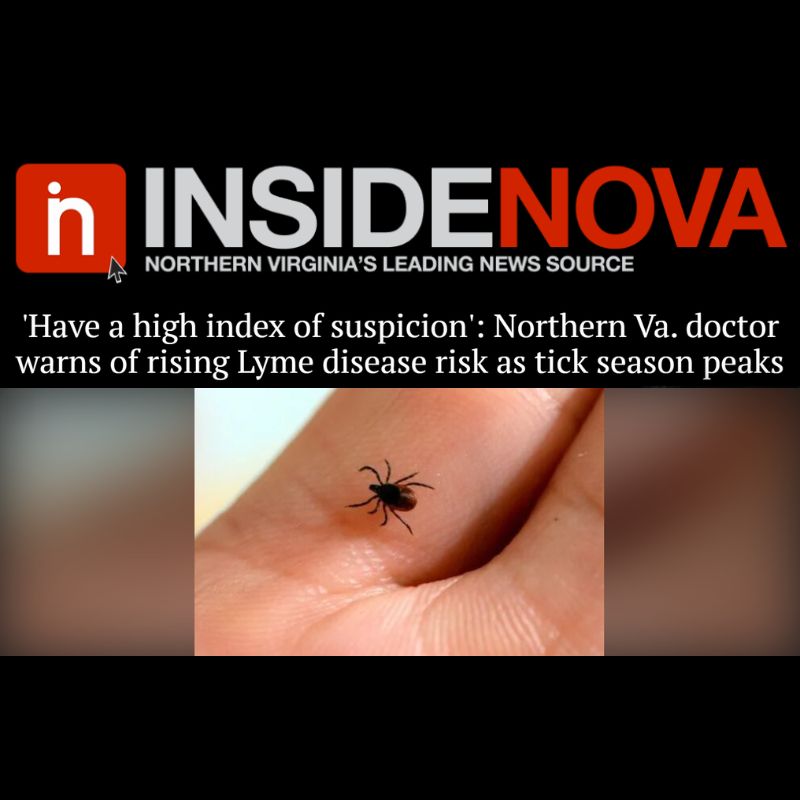
/in Featured Press, Lyme and Chronic Lyme/by Kaplan CenterA mild winter and rising temperatures have created ideal conditions for ticks in Northern Virginia, increasing the risk of Lyme disease and other tick-borne illnesses. Dr. Gary Kaplan explains why the greatest risk may be closer than you think—right at the edge of your backyard—and shares key symptoms, prevention strategies, and the importance of early detection.
‘Have a high index of suspicion’: Northern Va. doctor warns of rising Lyme disease risk as tick season peaks
by Cameron Delean, InsideNoVA
Northern Virginia residents should brace for a surge in Lyme disease and other tick-borne illnesses as warmer weather and a mild winter create ideal conditions for ticks.
“This year we didn’t have a really severe winter,” McLean-based Dr. Gary Kaplan told InsideNoVa this week. “The ticks arrive, and the nymphs, in particular the newborn immature ticks, are the ones that can do the most damage in terms of spreading the disease. They are thriving right now.”
Those nymph-stage ticks are so small that people often never see them.
Keep watching
“The problem with the nymphs is … they’re little dots that look like a speck of dirt,” Kaplan said. “There’s a high probability of not seeing them, so that’s why [you] take extra precautions.”
Backyard risk
Northern Virginia is a Lyme-endemic area with a “very high concentration of ticks,” Kaplan said, adding that residents don’t need to head deep into the woods to be exposed.
“You don’t have to go hiking on the Appalachian Trail to get Lyme disease, as what a lot of people think,” he said. “The highest risk, especially in this area, [is] at the edge of most people’s backyards.”
He pointed to the region’s sizable deer and white-footed mouse populations as key drivers.
“Those are the creatures that carry Lyme disease and spread it,” Kaplan said. “So, combination of the relatively mild winter, very high concentration of ticks already in the area, and then lots of opportunities for the ticks to come in contact with people.”
Ticks typically wait on tall grass or brush at the edge of yards before latching on.
“Ticks are hitchhikers,” he said. “They climb out the edge, tall grass, and they’ll hop onto you.”
How to lower risk
Kaplan urged homeowners to manage their yards and take basic personal precautions.
“In and around the house, I would make sure that I don’t put wood piles next to the house … because ticks like moist, dark areas,” he said.
Kaplan recommends laying mulch or gravel between lawns and tree lines, using tick repellent such as DEET, considering tick-repellent clothing and wearing light-colored clothes to make ticks easier to spot.
“When you get inside, do a tick check, and you need to look in places where you wouldn’t necessarily think,” Kaplan added, noting behind the knees and around the waistband as common hiding spots. Showering after gardening or yard work can also help remove ticks.
“There’s lots you can do to protect yourself,” he said, “but you’ve got to be cautious, and you’ve got to be attentive.”
Unexpected symptoms
One of the biggest challenges is that early tick-borne illness often looks like something else.
“If you feel like you’ve got a flu in the middle of July, high on your list should be a tick-borne illness,” he said.
Lyme disease can start with fatigue, headache, low-grade fever, neck stiffness and other flu-like complaints. Other tick-borne infections, such as Bartonella, can bring additional neurological symptoms, swollen lymph nodes, purple stretch-mark-like rashes, night sweats and “air hunger,” according to Kaplan.
“You have to think in terms of the fact that many ticks carry multiple diseases, not just one,” Kaplan said. “These different kind of presentations [require a] high index of suspicion in order to be able to diagnose.”
One classic Lyme symptom, the bullseye rash, while a significant indicator to look for, is not always present.
“That bullseye rash only appears in about 25 [to] 30% of people, and it’s not necessarily a classic bullseye,” Kaplan said. “It may look like a bruise, it may look like just a red area. Then it goes away.”
Sudden onset of facial nerve paralysis should also prompt immediate concern.
“Bell’s palsy is a classic symptom of Lyme disease,” he said. “Seeing that kind of a symptom, [you should] immediately think about Lyme disease.”
Chronic Lyme
If Lyme disease is missed or not fully treated, Kaplan said it can progress to chronic disease with serious, lasting consequences.
Over time, patients can develop severe fatigue, brain fog, difficulty concentrating, neck stiffness and joint pain that moves around the body. In later stages, Lyme disease can affect the heart and nervous system.
“Chronic Lyme can be quite devastating and have a lot of severe consequences,” Kaplan said. He added that Lyme getting into the brain can lead to seizures and debilitating headaches.
Most tick-borne diseases are treated with antibiotics, but the specific medication depends on the organism, he said.
Kaplan also warned that some patients and clinicians place too much confidence in early negative test results.
“If you test too soon, you’re going to miss the disease,” he said. “It takes two to three weeks, four weeks before the testing we do is positive, because the testing is based on the immune system’s response to the disease.”
For patients who develop the characteristic bullseye rash, he said, doctors should not wait.
Kaplan said people in Northern Virginia need to recognize the risk and act quickly when symptoms appear.
“Have a high index of suspicion,” he said. “People need to think about this disease.”
A mild winter and rising temperatures have created ideal conditions for ticks in Northern Virginia, increasing the risk of Lyme disease and other tick-borne illnesses. Dr. Gary Kaplan explains why the greatest risk may be closer than you think—right at the edge of your backyard—and shares key symptoms, prevention strategies, and the importance of early detection.
We are here for you, and we want to help.
Our goal is to return you to optimal health as soon as possible. To schedule an appointment please call: 703-532-4892 x2
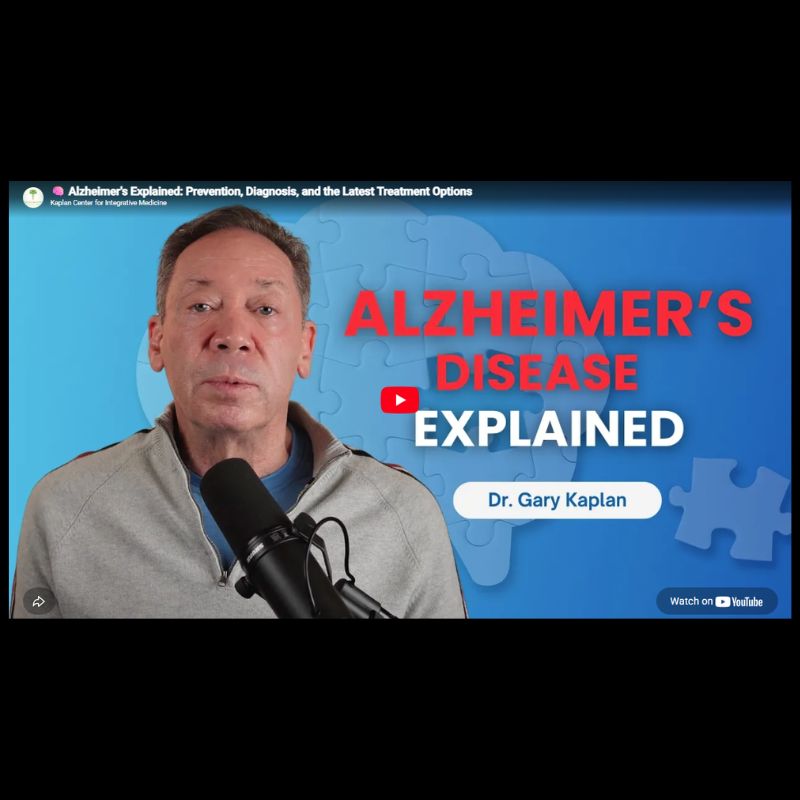
ME/CFS (Chronic Fatigue): What It Is, Why It Happens, and Why Recovery Is So Complex
/in Chronic Fatigue, Long Covid, Lyme and Chronic Lyme/by Kaplan CenterChronic Fatigue Syndrome, also known as Myalgic Encephalomyelitis (ME/CFS), is far more than simply feeling tired.
In this video, Dr. Kaplan explains the science behind ME/CFS, including why patients experience debilitating fatigue, post-exertional malaise (PEM), brain fog, non-restorative sleep, and flu-like symptoms that can persist for years.
He explores how dysfunction in the immune system, nervous system, and cellular energy production may contribute to this complex condition—and why so many patients are often misunderstood or misdiagnosed.
You’ll learn:
✔ What ME/CFS is and how it differs from ordinary fatigue
✔ Why post-exertional malaise (PEM) is a defining symptom
✔ The role of neuroinflammation and the “brain on fire” phenomenon
✔ How mitochondrial dysfunction may contribute to profound exhaustion
✔ Why brain fog occurs and what it may reveal about the condition
✔ The connection between ME/CFS and viral triggers such as Epstein-Barr virus, Lyme disease, and Long COVID
✔ Why traditional approaches sometimes fall short
✔ Integrative and emerging approaches being explored for ME/CFS treatment
Dr. Kaplan also discusses the overlap between ME/CFS and fibromyalgia, a condition that shares some biological mechanisms but has its own unique features.
We are here for you, and we want to help.
Our goal is to return you to optimal health as soon as possible. To schedule an appointment please call: 703-532-4892 x2