• 703-532-4892
  • New Patients
  • Patient Portal
Kaplan Center for Integrative Medicine : McLean, Virginia
  • Conditions
    • Long-COVID Syndrome
    • Alzheimer’s Disease & Cognitive Decline
    • PANS & PANDAS
    • Lyme Disease
    • Small Intestinal Bacterial Overgrowth (SIBO)
    • Fibromyalgia
    • Heavy Metal Toxicity
    • Hormonal Imbalances
    • Mold Toxicity
    • Myalgic Encephalomyelitis/Chronic Fatigue Syndrome
    • Neurotoxicity
    • Thyroid Disorders
    • All Conditions
  • Services
    • Therapeutic Plasma Exchange (TPE)
    • Longevity Services
    • Long-COVID Recovery Services
    • Acupuncture
    • Detoxification Protocol
    • Herbal Remedies & Nutritional Supplements
    • Hormone Replacement Therapy
    • IV Therapy
    • Niagen+ (NR) IV Therapy
    • Nutritional Testing, Counseling & Coaching
    • Physical Therapy
    • Psychotherapy, EMDR & Guided Meditation
    • Telemedicine
    • All Treatments
  • Providers
    • Gary Kaplan
    • Lisa Lilienfield
    • Rebecca Berkson
    • Jeanne Scheele
    • Patricia Alomar
    • Jessica Briscoe Coleman
    • Jodi Brayton
    • Chardonée Donald
    • Jared Sharp
    • All Providers
  • About
    • Why Kaplan Center?
    • The Kaplan Method®
    • Integrative Medicine
    • Dr. Gary Membership
    • Our Support Team
    • Financial FAQs
    • Provider Fees
    • Our Goal
    • Patient Testimonials
  • Resources
    • Health & Wellness Blog
    • Events
    • Featured Press
    • Featured Podcasts and Webinars
    • Videos
    • Books
    • eBooks
    • Professional Resources
  • Store
  • Contact
  • Click to open the search input field Click to open the search input field Search
  • Menu Menu
Blog Articles
Can Adults Develop Allergies in Adulthood

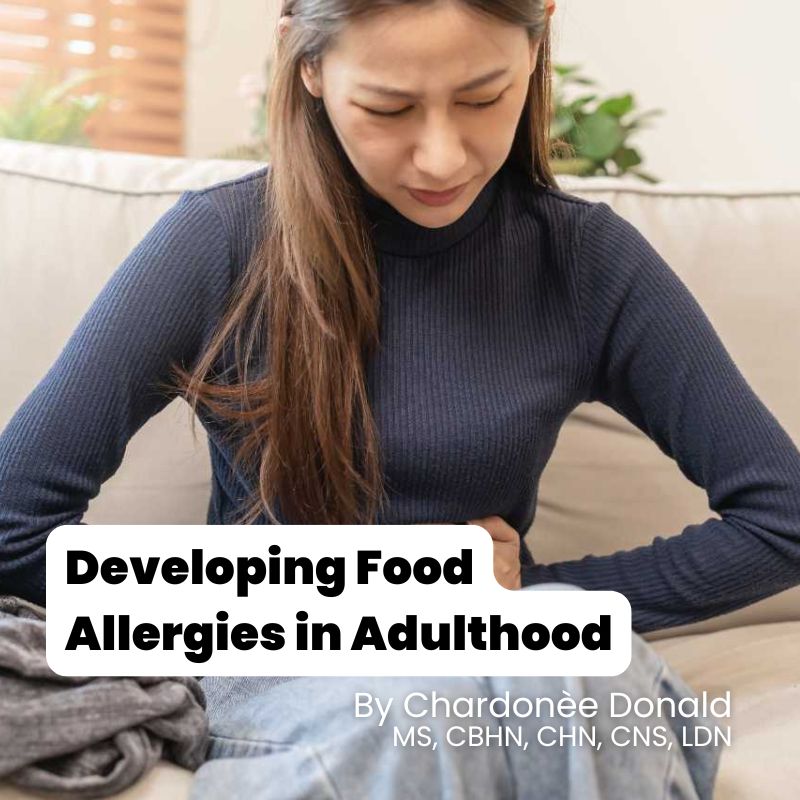
Developing Food Allergies in Adulthood

May 12, 2026/in Inflammation, Nutrition/by Chardonée Donald, MS, CBHS, CHN, CNS, LDN

When most people think about food allergies, they picture a child with peanut allergies having to navigate peanut-free environments and parents diligently reading food labels. However, food allergies are not limited to childhood and can develop at any stage of life.

For many adults, the sudden onset of food allergies can be confusing, frustrating, and can feel overwhelming. However, from an integrative and functional nutrition perspective, it offers an important opportunity to explore what is going on in the body and identify the root causes of the immune dysfunction.

WHY AWARENESS MATTERS

During Food Allergy Awareness Week (May 10-16, 2026), it is important to recognize that adult-onset food allergies are often a signal of an underlying imbalance that has occurred in the body. Many individuals dismiss early symptoms or get them confused with food sensitivities, delaying proper diagnosis and missing the opportunity to address the root cause.

Click here to read more about the difference between food allergies and food sensitivities/intolerances.

Can someone really develop a food allergy as an adult?

This is a common question. Yes, while some individuals outgrow childhood allergies, others can unfortunately develop new sensitivities—or even true allergies—later in life. This can be due to many different contributing factors:

  • Gut dysfunction or “leaky gut” – When the gut lining becomes compromised, larger food particles can enter the blood stream and trigger an immune response
  • Microbiome imbalance – When the gut’s microbiome is out of balance the immune system can become hypersensitive to pollen and food proteins, leading to allergic reactions and increased histamine production.
  • Toxin exposure – Environmental toxins contribute to inflammation and immune dysregulation.
  • Hormonal changes – Hormonal shifts can act as triggers to how the body (immune system) reacts to previously harmless substances.
  • Chronic stress – Stress as a factor in allergies? Yes, ongoing stress can impair a person’s gut health, weaken immune balance, and increase inflammation.
  • Chronic infections – Persistent infections may overstimulate the immune system, making it more reactive over time.
  • Chronic inflammation – Long-term inflammation can disrupt immune function and contribute to the development of food sensitivities or allergies.

Over time, the factors above can heighten immune reactivity and influence the development of food allergies.

Common Adult-Onset Food Allergies

The more common adult-onset food allergies include:

  • Peanuts
  • Fish
  • Soy
  • Wheat
  • Tree nuts
  • Shellfish (crap, lobster, and shrimp)

Recognizing The Symptoms

Symptoms can range from mild to severe and may include:

  • Anaphylaxis, a life-threatening reaction requiring immediate medical attention.
  • Swelling of the face, lips, or throat
  • Losing your voice
  • Difficulty breathing
  • Gastrointestinal distress (nausea, vomiting, diarrhea, pain)

It is very important to differentiate between true allergies and food sensitivities, as each needs guided appropriate care.

What To Do If You Suspect A Food Allergy or Food Sensitivity

If someone suspects a new food allergy, evaluation by an allergist is important—especially if reactions are becoming more severe or unpredictable. In the meantime, keep a detailed food and symptom journal and avoid suspected trigger foods until you’ve been evaluated.

Once diagnosed, make sure to carry emergency medication at all times, if they have been prescribed.

Finally, make sure to follow up with a functional medical professional for treatment. A functional medicine provider will look beyond symptom reduction and address all of the underlying factors that may be contributing to immune dysregulation—to improve overall immune resilience, gut health, and long-term quality of life.

Living With A Food Allergy As An Adult

Adjusting to a new food allergy later in life can be challenging, but with the right support, it can be manageable. With education, personalized nutrition strategies, and mindful food choices, individuals can maintain a nourishing, safe, and enjoyable lifestyle.

Be Well,
Chardonèe

We are here for you, and we want to help.

Our goal is to return you to optimal health as soon as possible. To schedule an appointment please call: 703-532-4892 x2


You might also like
Paying attention to what you eat and drink may help prevent headache or migraine attacks. What to Eat and What to Avoid If You Get Migraine Headaches
ALLERGY VS INTOLERANCE Food Allergies vs. Food Sensitivities (Intolerance): Aren’t They the Same?
Dr. Lilienfield discusses Irritable Bowel Syndrome Treatments Treating Irritable Bowel Syndrome: A Functional Medicine Approach
Cut out these foods to clear up your brain. Stop Eating These Foods And Clear Up Your Brain!
What we know about long COVID after six years By Dr. Gary Kaplan What we know about long COVID after six years
reading labels, hidden food allergies Are Hidden Food Allergies Making You Miserable?
0 replies

Leave a Reply

Want to join the discussion?
Feel free to contribute!

Leave a Reply Cancel reply

Your email address will not be published. Required fields are marked *

Print Friendly, PDF & Email

Resources

  • Health & Wellness Blog
  • Events
  • Featured Press
  • Featured Podcasts and Webinars
  • Videos
  • Books
  • eBooks
  • Professional Resources
  • Research

Subscribe to Our Newsletter

Do you have questions about The Kaplan Center for Integrative Medicine?
Call Us Today!

703-532-4892, Ext 2

Are you looking to improve your overall wellness?

Contact Us Today

Personalized care you can trust.

Our integrative, non-surgical treatment approach is highly successful in maintaining wellness and also treating chronic pain and illness. For more than 40 years, we have delivered superior, cutting-edge health care in the Washington, DC area.

QuickLinks

  • Integrative Medicine – McLean, VA – Kaplan Center
  • Conditions
  • Providers
  • Services
  • About
  • Resources
  • Store
  • Contact

Contact Information

Tel: 703-532-4892
Fax: 703-237-3105

6829 Elm Street, Suite 300
McLean, Virginia 22101
Map It

Hours of Operation
Mon – Thu : 8 am – 5 pm, ET
Fri : 8 am – 12 pm, ET

Copyright 2025 The Kaplan Center. All rights reserved. | Privacy Policy | Patient Portal | The Foundation for Total Recovery
  • Link to Facebook
  • Link to X
  • Link to Youtube
  • Link to LinkedIn
  • Link to Instagram
Link to: Food Allergies vs. Food Sensitivities (Intolerance): Aren’t They the Same? Link to: Food Allergies vs. Food Sensitivities (Intolerance): Aren’t They the Same? Food Allergies vs. Food Sensitivities (Intolerance): Aren’t They the Same...ALLERGY VS INTOLERANCE
Scroll to top Scroll to top Scroll to top