Peter Diamandis, MD, PhD, author of the books Abundance and Bold, founder of XPRIZE Foundation, and co-founder of the companies Human Longevity and Planetary Resources, gave a keynote address at the Vatican that focused on longevity and innovation in the field of regenerative medicine.
Dr. Diamandis’ remarks were both thought provoking and inspiring and I thought it was a wonderful piece to share with you. I hope you enjoy it as much as I did!
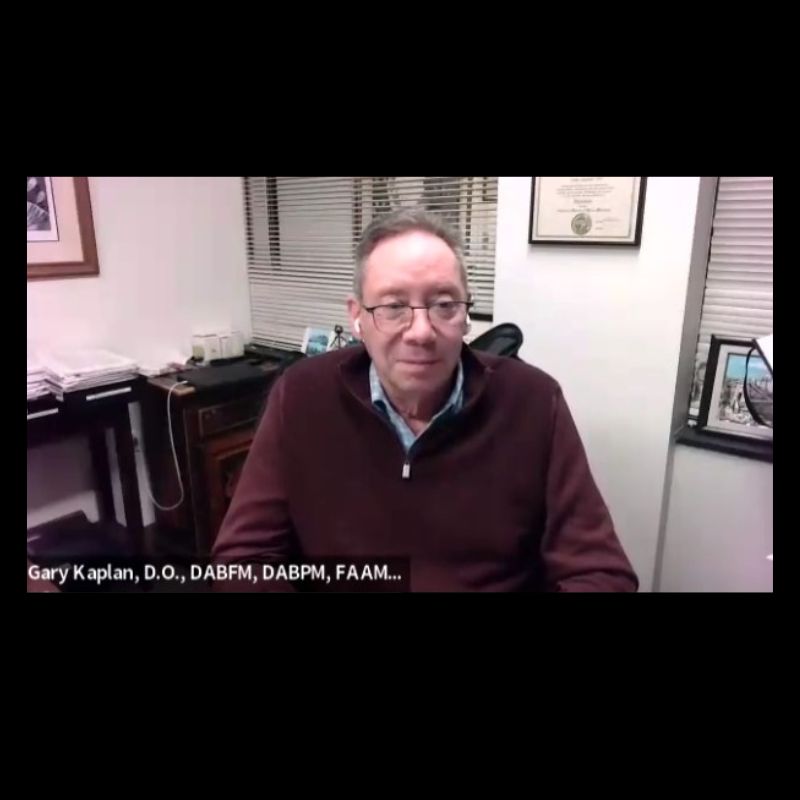
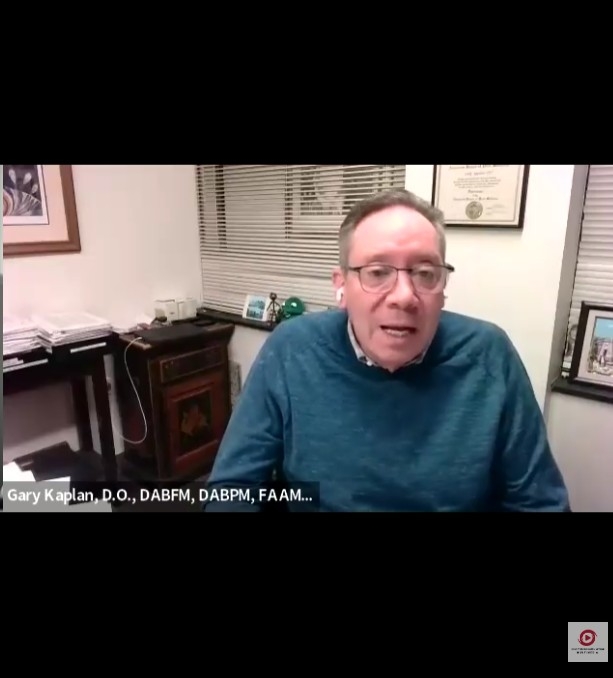
– Dr. Kaplan
VATICAN REMARKS
Every year I take the major XPRIZE benefactors (Vision Circle & Innovation Board members) on an Adventure Trip. This time, we went to Vatican City to discuss longevity and regenerative medicine, piggybacking on the United to Cure conference hosted by the Pope.
The notion that the Vatican hosted this event, and even had a panel on “the morality of immortality” (or the immorality of mortality) is pretty amazing (more on this in a future blog). It’s more evidence that we’re living during the most extraordinary time ever in human history.
Since I had the great honor to give the opening keynote, I thought I’d use this blog as an opportunity to share my remarks. Let’s dive in.
Contextualizing Human Progress
It’s hard to remember how extraordinary the world is today when we’re bombarded 24/7 by news about problems and disasters. History provides valuable context, however.
Some 700 years ago, the Plague killed 200 million people in a single year — 40 percent of England.
About 500 years ago, famine claimed 3 million lives in France.
100 years ago (in 1918) World War I claimed 16 million lives, while the flu pandemic caused 50 million deaths. All in a single year.
If these were our current headlines, we would be in shock.
We forget how much the world has progressed in the past century alone.
The per-capita income for every nation on the planet has tripled. The human lifespan has doubled. The cost of food has dropped thirty-fold. The cost of transportation hundreds of fold. The cost of communications millions of fold.
The human lifespan is another way to contextualize progress:
In the Middle Ages, the average human lifespan grew to 35.
A century ago, it was the mid-40’s.
Today, it’s around 80.
One of my missions — which I share with many of you — is to discover how we can add 20, 30 or more healthy years to our lives. How do we make 100 years old the new 60, and then intercept exponentially growing technologies to extend the healthy human lifespan beyond that?
Exponential Technologies Driving Longevity
We take the technology and the empowerment we have today for granted.
I teach my Abundance community that whatever becomes digitized enters a period of slow, deceptive growth. Next, it becomes disruptive, and then it dematerializes, demonetizes, and democratizes products and services.
Consider storage, which is critical for the genomics world today.
In 1981, 1 gigabyte of storage cost half a million dollars. Today, it’s 25 million times cheaper at 2 cents per gigabyte.
How about computation? In 1971, Intel put out its first computer chip, the Intel 4004. It had 2,300 transistors on at $1 each.
Intel no longer actually tells you how many transistors are on their chips, but the recent Core i7 had 14.4 billion transistors at less than a millionth of a penny each.
This represents a 330 billion-fold increase in price performance in 45 years.
If you have a smartphone, you have more computational power in your hand than all the governments on the planet had just 30 years ago.
But that doesn’t compare to what’s coming next in quantum computing. This year, we expect to see ‘quantum supremacy’ — that moment in time where a quantum computer can solve a problem that no classical computer can do.
Google recently unveiled Bristlecone. This new quantum computer chip has 72 qubits. By the time it gets to 300 qubits, it can perform more calculations than there are atoms in the known universe.
We’re about to see an extraordinary revolution in drug discovery.
Pharmaceutical companies today are spending decades and billions of dollars to discover molecules that affect us. But soon, quantum computers will allow us to model molecular interactions at a level like never before.
Imagine an individual working on a quantum computer on the cloud who is able to look at the interaction of a particular molecule with all 20,000 coded proteins in the human genome. Drug discovery will go off the charts. This isn’t happening 30 years from now, but in the next decade.
What about communications? We take it for granted, but in 2017, we had 3.8 billion people connected on Earth. In the next five years, we’ll see the deployment of the 5G global network that Qualcomm has been developing.
We’re about to see Facebook and Google with balloons and drones and satellites. OneWeb will deploy 900 satellites leveraging a $1.2 billion Softbank investment, and then layer on top of that 4,425 satellites being launched by SpaceX, and we’re about to connect every single human on the planet with a gigabit connection speed.
A gigabit connection for everyone, effectively for free.
That connection represents a lifeline for health sciences. It’s an ability to upload data or enable AI support.
And it doesn’t slow down. With the Internet of Things and a proliferation of sensors, by 2020 we’ll have 50 billion connected devices with a trillion sensors in the world. By 2030, we’ll see 500 billion connected devices with 100 trillion sensors.
In terms of health, every single person will have the ability for real-time monitoring. Every single element of their lives — their glucose, their blood pressure, the microRNAs, their vitamin D levels — can be uploaded to an AI that can convey their exact health status.
We’ll all have a version of JARVIS from “Iron Man.” These personal AIs can collect our data and enable us to be the CEO of our own health.
The acceleration continues with genome sequencing. Back in 2000, the price of sequencing a human genome — all 3.2 billion letters of your life — was $100 million and 9 months’ time. Today, it’s $1,000 per genome, and within two years, with Illumina’s newest machines, it will cost about $100 and be completed in 1 hour.
We’re talking about trillionfold increases in price-performance capability, which is in turn driving a revolution in cellular medicine, stem cells, natural killer cells, CAR T-cells. It’s extraordinary.
I believe nothing is truly scarce. Nothing.
We have the ability, with access to these technologies, to say, “This is the problem I want to solve.”
We often talk about our desires and our abilities.
I posit that we’re living in a time a day and age that within our lifetimes, we will truly have the ability to meet the needs of every man, woman and child on this planet.
You may have heard me say, “The world’s biggest problems are the world’s biggest business opportunities,” and, “If you want to become a billionaire, help a billion people.”
What is the challenge you desire to solve? What is the impact you want to create?
I believe that each of us should be taking on what I call the Impact Pledge… to stand up and say, “During my lifetime, this is the problem that I want to solve. This is what I stand for.
It used to be that capital was restrictive. Today, we’re living in a world of crowdfunding, angel capital, venture capital, and even startups being funded by sovereign wealth funds. But it doesn’t end there. In 2017, the world saw $3.8 billion in ICOs (initial coin offerings) — an entirely new mechanism to generate investable capital.
And even that is accelerating, in the first four months of 2018 alone, there was $6.2 billion of ICOs. Capital is flowing to great ideas.
What is your great idea?
Each of us has what I call a Massively Transformative Purpose in our lives that motivates us to pursue the seemingly impossible.
What we do with our time matters.
What Moonshots we take on to change the world matters.
What impact do you want to make on this planet?
You have access to everything you need. More knowledge on Google or Baidu, more computational power on the cloud, more capital, more access to AI.
With this abundance, what else do you actually need?
Ultimately, it is the “dedicated, passionate human mind” that makes all the difference.
A mind with the audacity to think thoughts like…
I refuse to allow this disease to go on for a day longer.
I refuse to not have the ability to feed a billion people, or to save a billion women’s lives.
We are alive in a time of great capabilities.
The choice is yours.
Let’s create a world of healthcare abundance.
Let’s make disease a thing of the past.
Let’s make 100 years old the new 60, and then once we get there, we can debate how we get to 150 or even 200.
– Dr. Peter Diamandis
A study published in the New England Journal of Medicine this month is good news for women who want more personalized care for treatment of breast cancer.
10,000 women were followed over 9 years. These women had early stage, receptive to hormones and negative to a receptor called HER2, all characteristics of the most common type of breast cancer. They then had genetic testing and given a score that predicts risk of breast cancer recurrence after surgery. Low scorers can be treated with hormone therapy and high scorers do better with chemotherapy and hormone therapy. The middle scorers were divided into 2 groups – chemo plus hormones or hormones only. After 9 years, the cancer-free rate for both of the groups that scored in the middle after genetic testing were similar, 83-84%.
Side effects from chemotherapy can be very disruptive, so this is study is very exciting for women desiring a more gentle approach.
Within the foundation of osteopathy is the concept that freedom of movement within all structures of the body is the key to their healthy functioning and self-healing abilities. Life is movement, a result of our muscles, bones and organs moving together harmoniously. Visceral manipulation is one such manual technique that fully embraces this concept.
How it works
The viscera, or the internal organs located within the chest and abdomen, have an inherent motion and this motion is connected to the physiological functioning of the organs. Most people don’t realize that our organs are indeed in constant motion as we move. For example, our kidneys slide up and down our Psoas muscle, a major hip and trunk flexor. This is possible because our vertebrae create a frame which is supported by our muscles. Its job is to protect our organs that are enveloped by membranes and serous fluid and allow them to move freely in the cavities formed by the skeleton. When the viscera become restricted, the body is forced to compensate in various ways, leading to a functional problem. And if not remediated it could eventually lead to a structural problem. Getting back to the example of our kidneys, if its mobility is restricted, it can contribute to someone’s back pain.
But how does one lose this mobility in the first place? It can be the result of many factors such as surgeries, diet, posture, and physical trauma, to name a few. A small dysfunction in one area can lead to problems elsewhere in the body due to the interconnectedness of the fascial system. Therefore, the origin of pain can actually be in a different place. The body is essentially forced to develop a compensatory pattern until the source of the dysfunction is located and treated.
The goal of visceral manipulation is to restore homeostasis, or stability, within the affected organ(s). This, in turn, will also positively affect the lymphatic, circulatory and neurological systems that surround the organ being mobilized. Palpating, or using gentle touch, to locate tensions in the fascia (muscles) by a trained hand can reveal much about the organ’s function. This technique allows the practitioner the opportunity to affect deep change through a gentle approach.
Jean-Pierre Barral, a Physiotherapist (R.P.T.) and Osteopath (D.O.), is the developer of the Visceral Manipulation technique. He first developed this technique in France and started teaching it in the United States in 1985. His clinical work observing tissue tension patterns in cadavers along with knowledge of biomechanics lead to the development of Visceral Manipulation which is now used by many health practitioners as an important therapeutic tool.
We are here for you, and we want to help.
Our goal is to return you to optimal health as soon as possible. To schedule an appointment please call: 703-532-4892 x2















Dr. Peter Diamandis on Technology, Longevity, and Great Ideas
/in News, Wellness/by Gary Kaplan, DOPeter Diamandis, MD, PhD, author of the books Abundance and Bold, founder of XPRIZE Foundation, and co-founder of the companies Human Longevity and Planetary Resources, gave a keynote address at the Vatican that focused on longevity and innovation in the field of regenerative medicine.
Dr. Diamandis’ remarks were both thought provoking and inspiring and I thought it was a wonderful piece to share with you. I hope you enjoy it as much as I did!
– Dr. Kaplan
New Breast Cancer Study Supports A More Gentle Approach to Treatment
/in News/by Lisa Lilienfield, MDA study published in the New England Journal of Medicine this month is good news for women who want more personalized care for treatment of breast cancer.
10,000 women were followed over 9 years. These women had early stage, receptive to hormones and negative to a receptor called HER2, all characteristics of the most common type of breast cancer. They then had genetic testing and given a score that predicts risk of breast cancer recurrence after surgery. Low scorers can be treated with hormone therapy and high scorers do better with chemotherapy and hormone therapy. The middle scorers were divided into 2 groups – chemo plus hormones or hormones only. After 9 years, the cancer-free rate for both of the groups that scored in the middle after genetic testing were similar, 83-84%.
Side effects from chemotherapy can be very disruptive, so this is study is very exciting for women desiring a more gentle approach.
Lisa Lilienfield, MD
Visceral Manipulation: What Is It & How Does It Work?
/in Treatments/by Patricia Alomar, M.S., P.T.Within the foundation of osteopathy is the concept that freedom of movement within all structures of the body is the key to their healthy functioning and self-healing abilities. Life is movement, a result of our muscles, bones and organs moving together harmoniously. Visceral manipulation is one such manual technique that fully embraces this concept.
How it works
The viscera, or the internal organs located within the chest and abdomen, have an inherent motion and this motion is connected to the physiological functioning of the organs. Most people don’t realize that our organs are indeed in constant motion as we move. For example, our kidneys slide up and down our Psoas muscle, a major hip and trunk flexor. This is possible because our vertebrae create a frame which is supported by our muscles. Its job is to protect our organs that are enveloped by membranes and serous fluid and allow them to move freely in the cavities formed by the skeleton. When the viscera become restricted, the body is forced to compensate in various ways, leading to a functional problem. And if not remediated it could eventually lead to a structural problem. Getting back to the example of our kidneys, if its mobility is restricted, it can contribute to someone’s back pain.
But how does one lose this mobility in the first place? It can be the result of many factors such as surgeries, diet, posture, and physical trauma, to name a few. A small dysfunction in one area can lead to problems elsewhere in the body due to the interconnectedness of the fascial system. Therefore, the origin of pain can actually be in a different place. The body is essentially forced to develop a compensatory pattern until the source of the dysfunction is located and treated.
The goal of visceral manipulation is to restore homeostasis, or stability, within the affected organ(s). This, in turn, will also positively affect the lymphatic, circulatory and neurological systems that surround the organ being mobilized. Palpating, or using gentle touch, to locate tensions in the fascia (muscles) by a trained hand can reveal much about the organ’s function. This technique allows the practitioner the opportunity to affect deep change through a gentle approach.
Jean-Pierre Barral, a Physiotherapist (R.P.T.) and Osteopath (D.O.), is the developer of the Visceral Manipulation technique. He first developed this technique in France and started teaching it in the United States in 1985. His clinical work observing tissue tension patterns in cadavers along with knowledge of biomechanics lead to the development of Visceral Manipulation which is now used by many health practitioners as an important therapeutic tool.
We are here for you, and we want to help.
Our goal is to return you to optimal health as soon as possible. To schedule an appointment please call: 703-532-4892 x2