Lyme disease and other tick-borne illnesses shouldn’t prevent you from enjoying the outdoors, but you should absolutely be aware of how to best protect yourself and what to do if you think you may have been bitten by a tick.
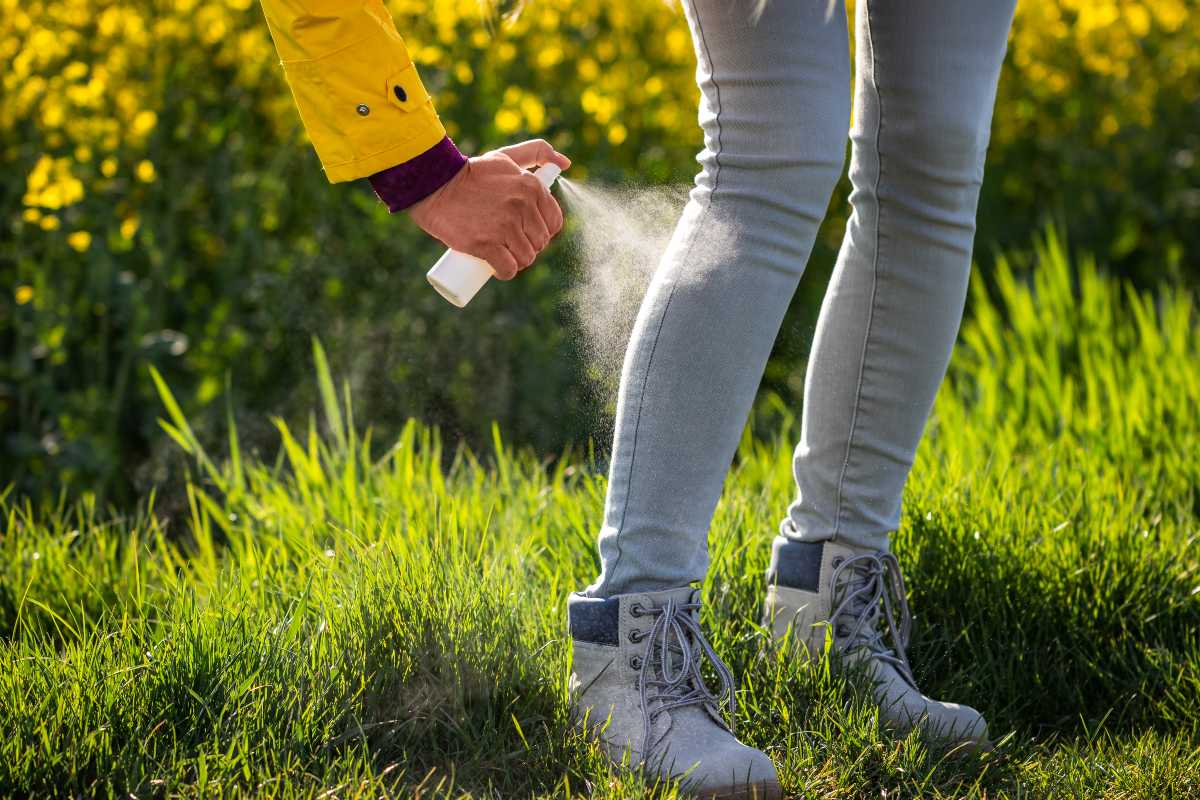
Lyme disease and other tick-borne illnesses (babesoisis, ehrlichiosis, anaplasmosis, bartonella, and Rocky Mountain Spotted Fever) can cause skin, heart, joint and nervous system problems. Early symptoms may be fatigue, chills, fever, headache, muscle and joint aches and swollen lymph nodes. With the chances of getting a tick bite higher than usual this year, precautions should be taken to minimize your risk. This includes using an effective repellent*, wearing long pants and sleeves whenever possible, incorporating a tick-check into your evening routine, and most importantly, staying educated on signs, symptoms, and treatments.
* Choose a repellent that contains one of the following: Picaridin (20%), IR3535 (20%), DEET (20-30%) or Oil of Lemon Eucalyptus (30-40%)
Below you’ll find some myths and truths about tick bites, and what to do if you think you may have Lyme, by Jane Marke, M.D., Integrative and Holistic Psychiatry
Tick Bite Care
What to do if you get a tick bite? There are some myths, but there’s good science busting them.
Tick attachment time is irrelevant. If a tick is sick enough, Lyme bugs are in their saliva, and they transmit the disease immediately. If the tick is less infected, they have to send bugs from their stomach to mouth, and that takes longer. But do you really want to count on how sick the tick is? Don’t let anybody tell you that because the tick wasn’t attached for 24-36 hours you’re ok.
One double-dose of doxycycline is not sufficient. The guidelines that are on the government guideline website, www.guidelines.gov advise 21 days. (That’s a federal government Institute of Medicine website and it’s high quality). No other Lyme guidelines exist. (CDC is not in charge of guidelines; the Institute of Medicine is.) The problem with the study of one single-dose of doxy is that it looked for the bull’s eye rash; it did not look to see if people got sick later. It reduced the rash incidence by 87%. That’s something; but not enough, and it tells us nothing about whether those without rash got sick later. There is no reason to not follow the government guidelines and to risk your health or that of your child because somebody only wants to give you one “double dose” of doxy. There are mice studies of this treatment, and they look abysmal
If you missed the tick bite and have the bull’s eye rash you are lucky inasmuch as you have incontrovertible evidence of being infected with Lyme. You HAVE Lyme. You can still get “early Lyme” treatment, but it’s not the same as treatment for a tick bite. You can find recommendations for treatment on the www.guidelines.gov website. Here’s a direct link to the Lyme Guidelines: http://bit.ly/2tqnaGU. These are government endorsed guidelines, the best we have at this point in time.
Tick-testing is controversial.Don’t wait for the testing to get treated. Negative tick tests give you no useful information; we have no idea how reliable tick testing is vs human testing. But if a tick is positive for a co-infection, something other than Lyme, you might consider getting prophylactic treatment. That’s your call, made with your doctor, but it’s a real consideration. So if you send the tick for testing, make sure the lab tests for co-infections, as well as several species of Lyme.
Jane Marke, MD Integrative and Holistic Psychiatry
Urgent Tickbite Care
80 East 11 Street, Suite 214
New York, NY 10003
The Kaplan Center congratulates our Director of Physical Therapy, Jeanne Scheele, on earning her Certification as a Pelvic Rehabilitation Practitioner from the Herman & Wallace Pelvic Rehabilitation Institute; a distinction of her expertise in treating pelvic floor dysfunction (PFD)!
PFD has been a special interest for Jeanne over the last 20 years. She has worked with women and men treating a variety of pelvic conditions including incontinence, frequency/ urgency, chronic UTI’s and painful urination, pelvic pain, bowel dysfunction and sexual dysfunction.
Jeanne met the requirements to sit for the exam by attending lecture and experiential courses for continuing education in pelvic rehabilitation.
“I still have a passion to learn more. Every patient who comes to see me, teaches me something. You just have to listen. It is never too late to learn.”
https://kaplanclinic.com/articles/pelvic-floor-dysfunction-6-myths-busted/
The positive health effects of turmeric have been touted by age-old healers as well as modern science. Turmeric’s active ingredient, curcumin, has powerful antioxidant and anti-inflammatory properties that help prevent free radical damage and calm the inflammatory process at the root of many chronic diseases.
However, the use of turmeric in treating chronic illness on a grander scale has been limited due to its relative low bioavailability, or “the proportion of a drug or other substance that enters the circulation when introduced into the body and so is able to have an active effect.”
Because of this limitation, research has primarily focused on ways to enhance absorption.
Past studies have shown that combining turmeric with other compounds, one such example being piperine (found in black pepper), can increase bioavailability, and there are supplements* now available formulated to allow maximum absorption.
Adding to this research, a new study authored by Dr. Ajay Goel, director of gastrointestinal research and translation genomics and oncology at Baylor Scott & White Research Institute, and published in Nature: Scientific Reports, confirmed that combining curcumin with essential turmeric oils (ETO-curcumin) significantly enhanced anti-inflammatory efficacy in DSS-induced colitis animal models (dextran sulfate sodium (DSS) is frequently used to induce colitis in experimental animals).
Clinical applications
Possible clinical applications of curcumin currently include neurodegenerative diseases, osteoarthritis, and rheumatoid arthritis. There is also evidence that curcumin can kill certain types of cancer cells, as well as reduce the development of several forms of cancer in lab animals.
Dr. Goel’s research highlights the anti-inflammatory potential of turmeric and suggests it may also have a place in the treatment of large intestinal diseases like ulcerative colitis.
Crohn’s disease and ulcerative colitis are autoimmune, inflammatory bowel diseases (IBD) that can cause a lifetime of painful symptoms. It is estimated that nearly 3 million people in the United States are living with IBD. Conventional treatment typically involves medications such as antibiotics, immunomodulators, or corticosteroids, amongst other types. However, a growing population of patients are exploring natural healing options instead of – or in conjunction with – medications. Our experience with IBD has shown that with the right lifestyle changes and dietary modifications, including supplementation and nutritional support, many people will see an improvement of symptoms.
“The takeaway for patients who want to experience the health benefits of curcumin through a commercially available supplement is to look for products that include additional compounds of turmeric – specifically, essential turmeric oils,” says Dr. Goel.
Remember, supplements are not regulated by the FDA, so before purchasing or taking any commercial supplements, speak to your physician who can recommend trusted sources, and more importantly, rule out any possible interactions with other medications.


















Tick Bites: What You Should (And Shouldn’t) Do If You Get One
/in Treatments/by Kaplan CenterLyme disease and other tick-borne illnesses shouldn’t prevent you from enjoying the outdoors, but you should absolutely be aware of how to best protect yourself and what to do if you think you may have been bitten by a tick.
Lyme disease and other tick-borne illnesses (babesoisis, ehrlichiosis, anaplasmosis, bartonella, and Rocky Mountain Spotted Fever) can cause skin, heart, joint and nervous system problems. Early symptoms may be fatigue, chills, fever, headache, muscle and joint aches and swollen lymph nodes. With the chances of getting a tick bite higher than usual this year, precautions should be taken to minimize your risk. This includes using an effective repellent*, wearing long pants and sleeves whenever possible, incorporating a tick-check into your evening routine, and most importantly, staying educated on signs, symptoms, and treatments.
* Choose a repellent that contains one of the following: Picaridin (20%), IR3535 (20%), DEET (20-30%) or Oil of Lemon Eucalyptus (30-40%)
Below you’ll find some myths and truths about tick bites, and what to do if you think you may have Lyme, by Jane Marke, M.D., Integrative and Holistic Psychiatry
Tick Bite Care
What to do if you get a tick bite? There are some myths, but there’s good science busting them.
Jane Marke, MD
Integrative and Holistic Psychiatry
Urgent Tickbite Care
80 East 11 Street, Suite 214
New York, NY 10003
Additional resources:
Horowitz Lyme-MSIDS Questionnaire
Jeanne Scheele, P.T., Receives Pelvic Rehabilitation Practitioner Certification
/in News/by Kaplan CenterThe Kaplan Center congratulates our Director of Physical Therapy, Jeanne Scheele, on earning her Certification as a Pelvic Rehabilitation Practitioner from the Herman & Wallace Pelvic Rehabilitation Institute; a distinction of her expertise in treating pelvic floor dysfunction (PFD)!
PFD has been a special interest for Jeanne over the last 20 years. She has worked with women and men treating a variety of pelvic conditions including incontinence, frequency/ urgency, chronic UTI’s and painful urination, pelvic pain, bowel dysfunction and sexual dysfunction.
Jeanne met the requirements to sit for the exam by attending lecture and experiential courses for continuing education in pelvic rehabilitation.
“I still have a passion to learn more. Every patient who comes to see me, teaches me something. You just have to listen. It is never too late to learn.”
https://kaplanclinic.com/articles/pelvic-floor-dysfunction-6-myths-busted/
Essential Turmeric Oils: A Hopeful Treatment For Ulcerative Colitis
/in Inflammation, Treatments/by Kaplan CenterThe positive health effects of turmeric have been touted by age-old healers as well as modern science. Turmeric’s active ingredient, curcumin, has powerful antioxidant and anti-inflammatory properties that help prevent free radical damage and calm the inflammatory process at the root of many chronic diseases.
However, the use of turmeric in treating chronic illness on a grander scale has been limited due to its relative low bioavailability, or “the proportion of a drug or other substance that enters the circulation when introduced into the body and so is able to have an active effect.”
Because of this limitation, research has primarily focused on ways to enhance absorption.
Past studies have shown that combining turmeric with other compounds, one such example being piperine (found in black pepper), can increase bioavailability, and there are supplements* now available formulated to allow maximum absorption.
Adding to this research, a new study authored by Dr. Ajay Goel, director of gastrointestinal research and translation genomics and oncology at Baylor Scott & White Research Institute, and published in Nature: Scientific Reports, confirmed that combining curcumin with essential turmeric oils (ETO-curcumin) significantly enhanced anti-inflammatory efficacy in DSS-induced colitis animal models (dextran sulfate sodium (DSS) is frequently used to induce colitis in experimental animals).
Clinical applications
Possible clinical applications of curcumin currently include neurodegenerative diseases, osteoarthritis, and rheumatoid arthritis. There is also evidence that curcumin can kill certain types of cancer cells, as well as reduce the development of several forms of cancer in lab animals.
Dr. Goel’s research highlights the anti-inflammatory potential of turmeric and suggests it may also have a place in the treatment of large intestinal diseases like ulcerative colitis.
Crohn’s disease and ulcerative colitis are autoimmune, inflammatory bowel diseases (IBD) that can cause a lifetime of painful symptoms. It is estimated that nearly 3 million people in the United States are living with IBD. Conventional treatment typically involves medications such as antibiotics, immunomodulators, or corticosteroids, amongst other types. However, a growing population of patients are exploring natural healing options instead of – or in conjunction with – medications. Our experience with IBD has shown that with the right lifestyle changes and dietary modifications, including supplementation and nutritional support, many people will see an improvement of symptoms.
“The takeaway for patients who want to experience the health benefits of curcumin through a commercially available supplement is to look for products that include additional compounds of turmeric – specifically, essential turmeric oils,” says Dr. Goel.
Remember, supplements are not regulated by the FDA, so before purchasing or taking any commercial supplements, speak to your physician who can recommend trusted sources, and more importantly, rule out any possible interactions with other medications.
**Theracurmin® HP is available for purchase from the Kaplan Medical Center Store.
We are here for you, and we want to help.
Our goal is to return you to optimal health as soon as possible. To schedule an appointment please call: 703-532-4892 x2