Nor shall any man’s entreaty prevail upon me to administer poison to anyone; neither will I counsel any man to do so. – Hippocratic Oath
When it comes to the treatment of chronic pain, the medical profession may be in violation of what can be regarded as the first medical ethic: First do no harm.
Together, the prevalence of chronic pain and the increasing use of opioids have created a “silent epidemic” of distress, disability, and danger to a large percentage of Americans. The overriding question is: Are we, as a nation, approaching management of chronic pain in the best possible manner that maximizes effectiveness and minimizes harm?
More recently, the Centers for Disease Control in an attempt to address the massive public health crisis identified by the NIH issued a new set of twelve guidelines aimed at reducing the risk of opioid over-prescription and over-use. Although these recommendations are not yet mandated, they are a necessary first step in rethinking how we look at chronic pain treatment and how narcotics are prescribed.
A Brief History of Opioid Medication Use/Misuse
In 1997, the American Academy of Pain Medicine, in an acknowledgment of 1) the severity of the suffering of patients with chronic pain, and 2) the medical profession’s inability to provide many of these patients with acceptable treatment solutions, issued a consensus paper endorsing the use of opioid medications for the treatment of chronic non-cancerous pain. The Academy openly acknowledged that one of the problems with the long-term use of opioids is addiction. In response, the medical profession began making the distinction between addiction and dependence. Addiction was defined as a craving for opioids with the intention of getting “high” consistent with drug-seeking behavior. Dependence, on the other hand, was defined as any situation in which an opioid medication was prescribed for medical reasons, with a dosage sufficient to control the pain, and a significant improvement in the quality of life of the patient. While the intention was noble, the consequences have been quite disastrous.
Since the release of the AAPM’s paper, the sales of prescription opioid medications measured in grams has skyrocketed. Between 1997 and 2007, sales rose by 866% for oxycodone, 525% for fentanyl, 280% for hydrocodone, and 222% for morphine. As reported in Pain Physician in July 2012, “Gram for gram, people in the United States now consume more narcotic medication than any other nation worldwide.” The report goes on to document that over 90% of patients taking opioid pain medications were prescribed these medications for the treatment of chronic pain.
In 2011, approximately 17,000 drug overdose deaths involved prescription opioid medications. The CDC also reported that “In 2007 there were more opioid analgesic deaths than overdoses involving heroin and cocaine combined.” While a significant number of these drug overdose deaths are associated with diversion of the medication to people who were not originally prescribed the medication, 60% of the deaths occurred in patients that were given prescriptions based on the prescription guidelines by medical boards.
Furthermore, significant side-effects from opioid medications include increased risk of birth defects, falls and fractures, addiction, constipation, heart attacks, a decrease in the production of testosterone, and in some cases, hyperalgesia, an actual worsening of the pain.
Deciphering the Problem
While the NIH report and recent CDC guidelines offer a number of important policy and institutional points to address, I believe that the fundamental basis of our problem comes from a lack of understanding of what we’re treating. Acute pain and chronic pain (not associated with ongoing tissue damage such as in cancer) are two very different phenomena in the body.
1. Chronic pain is not a thing but one manifestation of a complex physiological process that frequently impacts many body systems, including sleep, gastrointestinal, psychological, and endocrine. Thus, we must take a whole-person approach in our diagnosis and treatment, which requires looking at multidisciplinary treatment options.
2. Unquestionably the evidence supporting the use of long-term opioids in the treatment of chronic pain is insufficient. We need better studies to help us understand when long-term use is beneficial.
3. Physicians need to be better educated about the diagnosis and treatment of patients suffering from chronic pain. Ultimately the use of long-term opioid medications is an admission of treatment failure. The recent CDC guidelines are a step in the right direction in this regard.
As a pain specialist, I believe there is an important role for opioid medication, but that role should be limited. Opioids should only be prescribed with close monitoring by the diagnosing physician, for the purpose of relieving pain and improving quality of life when all other medical approaches have been exhausted.
First, do no harm. Opioids should be medications of last resort.
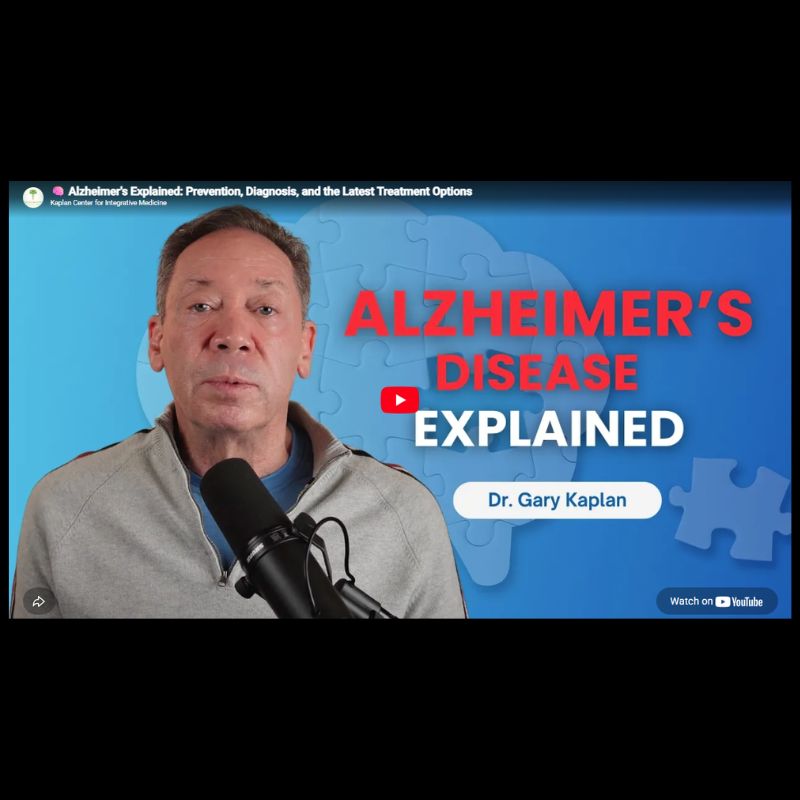
Dr. Kaplan explains how treating the symptoms of chronic pain is contributing to a system of mismanagement in this country. He discusses why we must shift the way chronic pain is treated by addressing its root cause – inflammation of the Central Nervous System.
“Provider Spotlight” is a series that highlights the wonderful team of healthcare providers and specialists here at the Kaplan Center for Integrative Medicine.
Dr. Lisa Lilienfield has been with the Kaplan Center for over 16 years. She is board certified in Family Medicine and practices Acupuncture and Osteopathic Manipulative Medicine, with expertise in both Women’s Health and Sports Medicine.
Why did you choose your specialty?
When I was in medical school I really enjoyed all of the different aspects of medicine, including Pediatrics, OB/GYN, Adult Medicine, and Psychiatry. When I learned about family medicine, which incorporates all of these specialties, I knew it was the right choice for me. Family medicine allows me to see all different age groups and practice all of the different types of medicine I really enjoy.
What is the biggest challenge in your practice and how do you overcome it?
In our practice, we see patients with very challenging and difficult cases, many of whom have already been to multiple physicians. For me, the biggest challenge centers around the concern I feel about whether or not I am going to find my patients a solution. I want to help each one of them find the right answer and feel better.
One of the wonderful and unique things about the Kaplan Center is our weekly collaborative meetings, where all of our providers put our heads together to find the appropriate solution for each patient in our practice. Fortunately, we have a team of really smart providers and we are never alone in finding the right path for our patients.
What’s the one piece of advice that you give to all of your patients?
The one piece of advice that I give all my patients is to find balance in their lives. Life isn’t all about work. We have to find balance with play and creativity. We need to take care of ourselves by eating good food, getting enough sleep, exercising, and socializing. It’s easy to fall into a pattern where you are out of balance, so this is the one piece of advice I wish all of my patients would follow.
What are some of your interests and/or pastimes outside of work?
Outside of work I am presently completing advance yoga teacher training. I have really enjoyed learning about the philosophy and history of yoga because there’s a lot more to it than most people think. This training has taken up a good amount of my extra time. I also have a big family – kids, step-kids, and grand-kids – and fortunately we are able to spend a lot of time together.
If you could choose another career, what would it be?
This question really stumps me! I actually decided to go into medicine when I was in the 7th grade. My father was a physician, not a clinical physician, but a professor, so at an early age I decided that it was also the path for me. Quite frankly I can’t imagine doing anything else!
To read Dr. Lilienfield’s complete bio, click here.
Epstein-Barr virus (EBV), also known as human herpesvirus 4, is one of the most common human viruses. It is a member of the herpes virus family and spreads most commonly through bodily fluids, primarily saliva. According to the CDC, about 90% of adults have antibodies that show that they have a current or past EBV infection.
Q: Do you see any connection to the Epstein-Barr virus and autoimmune disorders, particularly Hashimoto’s thyroiditis, and if so do you have any suggestions about supplements or diet that might counteract the symptoms of the virus?
Dr. Lisa: Many people have been exposed to Epstein-Barr virus (mononucleosis) at some time in their life, and most don’t even know it until a blood test is performed that shows an old infection. There is some research to show that autoimmune disorders may be related to previous viral or bacterial infections, including EBV. Anyone who has ongoing fatigue should get a full thyroid panel but may also need specific EBV and HHV6 titers (another type of herpes virus that has been associated with chronic fatigue). If these tests are positive, then an antiviral medication may be useful.
We are here for you, and we want to help.
Our goal is to return you to optimal health as soon as possible. To schedule an appointment please call: 703-532-4892 x2
















The Problem With Opioids for Chronic Pain
/in Treatments/by Gary Kaplan, DONor shall any man’s entreaty prevail upon me to administer poison to anyone; neither will I counsel any man to do so. – Hippocratic Oath
When it comes to the treatment of chronic pain, the medical profession may be in violation of what can be regarded as the first medical ethic: First do no harm.
In 2015, a report – The Role of Opioids in the Treatment of Chronic Pain – published by an independent panel of experts convened by the National Institutes of Health, stated:
Together, the prevalence of chronic pain and the increasing use of opioids have created a “silent epidemic” of distress, disability, and danger to a large percentage of Americans. The overriding question is: Are we, as a nation, approaching management of chronic pain in the best possible manner that maximizes effectiveness and minimizes harm?
More recently, the Centers for Disease Control in an attempt to address the massive public health crisis identified by the NIH issued a new set of twelve guidelines aimed at reducing the risk of opioid over-prescription and over-use. Although these recommendations are not yet mandated, they are a necessary first step in rethinking how we look at chronic pain treatment and how narcotics are prescribed.
A Brief History of Opioid Medication Use/Misuse
In 1997, the American Academy of Pain Medicine, in an acknowledgment of 1) the severity of the suffering of patients with chronic pain, and 2) the medical profession’s inability to provide many of these patients with acceptable treatment solutions, issued a consensus paper endorsing the use of opioid medications for the treatment of chronic non-cancerous pain. The Academy openly acknowledged that one of the problems with the long-term use of opioids is addiction. In response, the medical profession began making the distinction between addiction and dependence. Addiction was defined as a craving for opioids with the intention of getting “high” consistent with drug-seeking behavior. Dependence, on the other hand, was defined as any situation in which an opioid medication was prescribed for medical reasons, with a dosage sufficient to control the pain, and a significant improvement in the quality of life of the patient. While the intention was noble, the consequences have been quite disastrous.
Since the release of the AAPM’s paper, the sales of prescription opioid medications measured in grams has skyrocketed. Between 1997 and 2007, sales rose by 866% for oxycodone, 525% for fentanyl, 280% for hydrocodone, and 222% for morphine. As reported in Pain Physician in July 2012, “Gram for gram, people in the United States now consume more narcotic medication than any other nation worldwide.” The report goes on to document that over 90% of patients taking opioid pain medications were prescribed these medications for the treatment of chronic pain.
In 2011, approximately 17,000 drug overdose deaths involved prescription opioid medications. The CDC also reported that “In 2007 there were more opioid analgesic deaths than overdoses involving heroin and cocaine combined.” While a significant number of these drug overdose deaths are associated with diversion of the medication to people who were not originally prescribed the medication, 60% of the deaths occurred in patients that were given prescriptions based on the prescription guidelines by medical boards.
Furthermore, significant side-effects from opioid medications include increased risk of birth defects, falls and fractures, addiction, constipation, heart attacks, a decrease in the production of testosterone, and in some cases, hyperalgesia, an actual worsening of the pain.
Deciphering the Problem
While the NIH report and recent CDC guidelines offer a number of important policy and institutional points to address, I believe that the fundamental basis of our problem comes from a lack of understanding of what we’re treating. Acute pain and chronic pain (not associated with ongoing tissue damage such as in cancer) are two very different phenomena in the body.
1. Chronic pain is not a thing but one manifestation of a complex physiological process that frequently impacts many body systems, including sleep, gastrointestinal, psychological, and endocrine. Thus, we must take a whole-person approach in our diagnosis and treatment, which requires looking at multidisciplinary treatment options.
2. Unquestionably the evidence supporting the use of long-term opioids in the treatment of chronic pain is insufficient. We need better studies to help us understand when long-term use is beneficial.
3. Physicians need to be better educated about the diagnosis and treatment of patients suffering from chronic pain. Ultimately the use of long-term opioid medications is an admission of treatment failure. The recent CDC guidelines are a step in the right direction in this regard.
As a pain specialist, I believe there is an important role for opioid medication, but that role should be limited. Opioids should only be prescribed with close monitoring by the diagnosing physician, for the purpose of relieving pain and improving quality of life when all other medical approaches have been exhausted.
First, do no harm. Opioids should be medications of last resort.
Dr. Kaplan explains how treating the symptoms of chronic pain is contributing to a system of mismanagement in this country. He discusses why we must shift the way chronic pain is treated by addressing its root cause – inflammation of the Central Nervous System.
Provider Spotlight: Lisa Lilienfield, MD
/in Wellness/by Lisa Lilienfield, MD“Provider Spotlight” is a series that highlights the wonderful team of healthcare providers and specialists here at the Kaplan Center for Integrative Medicine.
Why did you choose your specialty?
When I was in medical school I really enjoyed all of the different aspects of medicine, including Pediatrics, OB/GYN, Adult Medicine, and Psychiatry. When I learned about family medicine, which incorporates all of these specialties, I knew it was the right choice for me. Family medicine allows me to see all different age groups and practice all of the different types of medicine I really enjoy.
What is the biggest challenge in your practice and how do you overcome it?
In our practice, we see patients with very challenging and difficult cases, many of whom have already been to multiple physicians. For me, the biggest challenge centers around the concern I feel about whether or not I am going to find my patients a solution. I want to help each one of them find the right answer and feel better.
One of the wonderful and unique things about the Kaplan Center is our weekly collaborative meetings, where all of our providers put our heads together to find the appropriate solution for each patient in our practice. Fortunately, we have a team of really smart providers and we are never alone in finding the right path for our patients.
What’s the one piece of advice that you give to all of your patients?
The one piece of advice that I give all my patients is to find balance in their lives. Life isn’t all about work. We have to find balance with play and creativity. We need to take care of ourselves by eating good food, getting enough sleep, exercising, and socializing. It’s easy to fall into a pattern where you are out of balance, so this is the one piece of advice I wish all of my patients would follow.
What are some of your interests and/or pastimes outside of work?
Outside of work I am presently completing advance yoga teacher training. I have really enjoyed learning about the philosophy and history of yoga because there’s a lot more to it than most people think. This training has taken up a good amount of my extra time. I also have a big family – kids, step-kids, and grand-kids – and fortunately we are able to spend a lot of time together.
If you could choose another career, what would it be?
This question really stumps me! I actually decided to go into medicine when I was in the 7th grade. My father was a physician, not a clinical physician, but a professor, so at an early age I decided that it was also the path for me. Quite frankly I can’t imagine doing anything else!
To read Dr. Lilienfield’s complete bio, click here.
Epstein-Barr & Autoimmune Disorders
/in Conditions/by Lisa Lilienfield, MDEpstein-Barr virus (EBV), also known as human herpesvirus 4, is one of the most common human viruses. It is a member of the herpes virus family and spreads most commonly through bodily fluids, primarily saliva. According to the CDC, about 90% of adults have antibodies that show that they have a current or past EBV infection.
Q: Do you see any connection to the Epstein-Barr virus and autoimmune disorders, particularly Hashimoto’s thyroiditis, and if so do you have any suggestions about supplements or diet that might counteract the symptoms of the virus?
Dr. Lisa: Many people have been exposed to Epstein-Barr virus (mononucleosis) at some time in their life, and most don’t even know it until a blood test is performed that shows an old infection. There is some research to show that autoimmune disorders may be related to previous viral or bacterial infections, including EBV. Anyone who has ongoing fatigue should get a full thyroid panel but may also need specific EBV and HHV6 titers (another type of herpes virus that has been associated with chronic fatigue). If these tests are positive, then an antiviral medication may be useful.
We are here for you, and we want to help.
Our goal is to return you to optimal health as soon as possible. To schedule an appointment please call: 703-532-4892 x2