Wednesday, November 8, 2023, 10:00 AM – Friday, November 10, 2023, 3:00 PM
Marriott Marquis, Washington, DC
Overview
There are over 20 million Americans suffering from a group of chronic disabling disorders analogous to the confused interplay of language described in the biblical Tower of Babel, who are diagnosed without a clear elucidation of pathophysiologic mechanisms. Fibromyalgia, Myalgic Encephalomyelitis/ Chronic Fatigue Syndrome (ME/CFS), Neuropsychiatric illnesses, Post-treatment Lyme Syndrome, Pediatric Acute on Neuropsychiatric Syndrome (PANDAS/PANS).
Adding to this massive disease burden the CDC now estimates that of the 40% of Americans who were infected with COVID-19 1 in 5 continue to suffer with what is now referred to as Post-acute sequalae of COVID (PACAL). Research has demonstrated that common to all of these conditions is dysregulation of the immune system resulting from an infectious insult. Dramatic advances have occurred in our understanding of all of these conditions as a result of COVID. We are entering an incredibly exciting period in medicine where our current Tower of Babel of diseases is beginning to coalesce around an understanding of shared pathophysiology. We are entering a period of true hope for those millions who are suffering where we will finally be able to provide comprehensive solutions for their illness.
This conference will bring together some of the leading researches and clinicians from around the world to discuss the advances in our understanding of these conditions and breakthroughs in diagnostic and treatment options.
If left undiagnosed and untreated, Lyme disease and other tickborne illnesses can have detrimental long-term effects on the body.
Lyme disease is the most reported vector-borne illness (diseases transmitted through mosquitoes, tick, and flea bites) in the United States. The latest numbers from the CDC estimate that approximately 476,000 patients are diagnosed and treated for Lyme each year.* People who are diagnosed early and receive proper treatment consisting of 28-30 day antibiotic therapy usually recover rapidly and completely. However, others who are correctly diagnosed and treated sometimes fail to fully recover, and, for a variety of reasons, still others go undiagnosed and untreated.
This article explores 4 reasons why Lyme disease may go undetected and/or become a chronic illness.
1) It is not always possible to confirm a tick bite
A key component of early diagnosis is recognition of the characteristic “bulls-eye” rash. Courtesy of the CDC/PHIL.
The only way you can contract Lyme disease is through the bite of an infected tick. If you develop the telltale bull’s eye rash (medically referred to as erythema migrans), there is no disputing the fact that you have Lyme disease, but not all patients have a rash and sometimes the rash does not have a bull’s eye appearance.
Ticks vary from the size of a poppy seed to a sesame seed, which makes them hard to see; and they prefer latching onto hard-to-see areas of the body such as armpits, groin, or scalp, so it’s likely you won’t notice their presence. This means, more often than not, you won’t know if you’ve been bitten, and by the time you start feeling sick – the incubation period for Lyme ranges from a few days to a few weeks – the tick will be long gone.
2) Lyme disease symptoms are very similar to other non-tickborne chronic illnesses.
Another factor that can make it difficult to obtain an accurate diagnosis is the similarity of symptoms that present with Lyme and other tickborne diseases (fever, chills, fatigue, headache, and joint aches) with those of many other non-tickborne illnesses, such as flu and other viral or bacterial infections.
If left undiagnosed and untreated, there can be detrimental effects on the body’s musculoskeletal and nervous systems. Symptoms such as chronic joint pain & headaches, extreme fatigue, and mood disorders can subsequently be misdiagnosed as fibromyalgia, chronic fatigue syndrome, or depression. This similarity of symptoms can cause delays in getting tested, and in turn causing delays in treatment.
There is also evidence indicating that chronic cases of Lyme disease (when symptoms persist after taking the typical short-term dose of antibiotics – also called Post Treatment Lyme Disease) contribute to a sustained inflammatory condition throughout the body that interferes with the healthy functioning of the nervous system. Known as Central Sensitization Syndrome, CSS has been implicated in several chronic illnesses and pain conditions, including fibromyalgia, chronic fatigue syndrome, depression, and Lyme disease.
3) The patient may also be co-infected with another tickborne disease.
Ticks can carry multiple bacteria and parasites, including Babesiosis, Ehrlichiosis, Anaplasmosis, Bartonella, and Rocky Mountain Spotted Fever (also called Spotted Fever Rickettsiosis), and it’s not uncommon to see patients with multiple tickborne infections, but you won’t find them if you don’t look. In fact, studies suggest that ticks that carry Lyme can also carry another infectious agent that produces similar symptoms to those of Lyme disease, but requires different antibiotics and lengths of treatment. Because of this, it is extremely important for physicians to test for all forms of tickborne diseases and not just for Lyme.
4) Laboratory tests, while important, have room for improvement
Unless you’re among the small percentage of people who present the classic bulls-eye rash, a confirmed diagnosis is a little trickier. Blood tests, can get you another step closer to a diagnosis – and more importantly – a treatment. But before deciding to run diagnostic testing, a doctor must consider a patient’s physical symptoms and obtain a comprehensive history that assesses their personal exposure risk. For example, if an individual is experiencing some suspicious symptoms and often hikes or horseback rides, and/or owns a pet that spends time outdoors, a Lyme test is in order.
Unfortunately, the tests aren’t perfectly reliable, especially if the order includes testing for Lyme and other tickborne diseases. Different labs have varying levels of sensitivity, and some testing can miss some cases of infection. To accurately interpret test results your physician needs to understand the sensitivity and specificity – or, in other words, the limitations — of the lab testing they are ordering.
So what’s the takeaway?
Be your own healthcare advocate. The best medicine is prevention. Before recreating outdoors, cover your body in light-colored clothing. Use an insect repellant on yourself and make sure to treat your pet. Take the time to check yourself and your pet for ticks after spending time outdoors. If you do find a tick, do not throw it away. It can be sent to a lab, such as tickreport.com, and tested for multiple tickborne diseases. Having this information will allow you to request the proper treatment faster.
If you do notice Lyme-like symptoms, a helpful first step is the Horowitz Lyme Questionnaire. Developed by Lyme expert, Dr. Richard Horowitz, this test should not replace medical advice from your physician but can be a useful tool to determine the likelihood of Lyme or other tickborne illnesses. The only way to confirm or rule out a Lyme diagnosis is with a blood test.
Every individual is unique in their genetic makeup, medical history, and environmental exposures. Each of these factors can affect how Lyme disease manifests itself in your body. If some of your symptoms persist, even after you have been treated — don’t give up! Be your own advocate; keep asking questions and seeking answers until you find the right treatment options for you.
—
*This number includes both actual infections and patients that are treated presumptively but may not actually be infected.
We are here for you, and we want to help.
Our goal is to return you to optimal health as soon as possible. To schedule an appointment please call: 703-532-4892 x2
Obstructive Sleep Apnea (OSA) is a condition characterized by pauses in breathing while you sleep. It usually occurs when the soft tissue in the rear of the throat collapses and the airway is blocked. Throughout the night as an individual struggles to breathe, they repeatedly leave deep sleep and partially awaken as they gasp for air. However, when morning comes they are unaware of their sleep disturbance. According to the National Sleep Foundation, sleep apnea affects somewhere between 10-30% of adults.
Symptoms and risk factors
OSA symptoms may first be noticed by another person, like snoring loudly (although not everyone who snores has sleep apnea), gasping for air, and moments when you stop breathing during sleep. Other symptoms can include headaches, daytime sleepiness, and waking up with a dry mouth.
The risk factors for the disorder include being overweight, male, and more than 40 years of age; but the disorder can affect anyone (even small children whose breathing may be obstructed by enlarged tonsils). Unfortunately, most sufferers are unaware that they have the disorder, so it often remains undiagnosed. But ignorance is not bliss.
Untreated obstructive sleep apnea can cause a host of serious medical problems including chronic tiredness, headaches, memory lapses, irritability, weight gain, depression, increased sensitivity to body aches and pain, and for postmenopausal women, an increase in joint pain. It also places sufferers at a higher risk of developing heart disease, stroke, and high blood pressure.
Finally, excessive sleepiness has public safety consequences: The American Automobile Association (AAA) estimates that one out of every six (16.5%) deadly traffic accidents, and one out of eight (13%) crashes requiring hospitalization of car drivers or passengers is due to drowsy driving.
Diagnosis and treatments
If you suspect you may have sleep apnea, you shouldn’t delay an evaluation. A good place to start is the Epworth Sleepiness Scale. It asks Eight Questions to assess your risk – if your score is equal to or higher than 10, you are at high risk for sleep apnea and should consult your provider. At The Kaplan Center, to help us detect sleep apnea, as well as providing markers for quality of sleep, we prescribe our patients a recyclable Home Sleep Apnea Test called the WatchPAT ONE (scroll down for more information).
Although there is no cure, there are steps you can take to help you get a more restful sleep. Here are 3 things to consider doing now:
Examine your lifestyle factors. Weight loss and/or maintaining a healthy weight, eliminating alcohol, and smoking cessation have all been shown to improve sleep. A one-step-at-a-time approach for any major lifestyle modifications will help you maintain these healthier practices for life.
Consider trying a mouthpiece. Patients diagnosed with mild to moderate sleep apnea may benefit from using an oral appliance. These are customized mouthpieces that are meant to reposition your jaw and/or tongue, depending on the specific device, to help keep your airway passage open while you sleep. If you think this may be a good fit for you, speak to both your healthcare provider and dentist for more information.
If you have been diagnosed with moderate-to-severe sleep apnea, a CPAP (continuous positive airway pressure) machine may be recommended by your provider. The machine uses a mask that fits over the mouth and nose, or just the nose, and gently blows air into the throat. The pressure from the air helps keep the airway open during sleep, minimizing disturbances due to sleep apnea.
Again, if you think you may be suffering from sleep apnea or another type of sleep disorder, don’t put off seeking help. Your sleep is very important, and we are here to get you back on track. Call us at 703-532-4892, ext. 2 to make an appointment.
WatchPAT® ONE for Diagnosing Sleep Apnea and Other Sleep Disorders
WatchPAT ONE Home Sleep Apnea Test (HSAT) can be a valuable tool to help us monitor if there are adequate amounts of Deep and REM sleep, apnea episodes, oxygen and heart rate, snoring, movement, and more.
Patients benefit from:
Convenience. WatchPAT ONE utilizes Bluetooth technology which allows patients to pair the device to their smartphone using Itamar’s proprietary app. Sleep study data is collected during the test and automatically sent to a secure, cloud-based server. Once the test is complete, a comprehensive report is automatically generated and sent directly to the prescribing physician.
An accelerated diagnosis. The sooner we have your data the sooner we can devise a treatment plan to improve your sleep.
Less travel. Patients do not need to come into our office to pick up or return their equipment.
A safe, hygienic product. Using a fully disposable product cuts down on the concern of spreading infection. No cleaning, sanitizing, or reusing of equipment.
















Dr. Kaplan to Co-chair Chronic Illness Symposium
/in News/by Kaplan CenterDr. Gary, Kaplan and Craig Shimasaki are co-chairing the upcoming 3-day symposium, New Developments in Understanding Chronic Illnesses Conference: The Role of Immune Dysfunction and Infections
Date & Location
Wednesday, November 8, 2023, 10:00 AM – Friday, November 10, 2023, 3:00 PM
Marriott Marquis, Washington, DC
Overview
There are over 20 million Americans suffering from a group of chronic disabling disorders analogous to the confused interplay of language described in the biblical Tower of Babel, who are diagnosed without a clear elucidation of pathophysiologic mechanisms. Fibromyalgia, Myalgic Encephalomyelitis/ Chronic Fatigue Syndrome (ME/CFS), Neuropsychiatric illnesses, Post-treatment Lyme Syndrome, Pediatric Acute on Neuropsychiatric Syndrome (PANDAS/PANS).
Adding to this massive disease burden the CDC now estimates that of the 40% of Americans who were infected with COVID-19 1 in 5 continue to suffer with what is now referred to as Post-acute sequalae of COVID (PACAL). Research has demonstrated that common to all of these conditions is dysregulation of the immune system resulting from an infectious insult. Dramatic advances have occurred in our understanding of all of these conditions as a result of COVID. We are entering an incredibly exciting period in medicine where our current Tower of Babel of diseases is beginning to coalesce around an understanding of shared pathophysiology. We are entering a period of true hope for those millions who are suffering where we will finally be able to provide comprehensive solutions for their illness.
This conference will bring together some of the leading researches and clinicians from around the world to discuss the advances in our understanding of these conditions and breakthroughs in diagnostic and treatment options.
Target Audience
Specialties – Allergy/Immunology, Family Medicine, Infectious Disease, Internal Medicine, Neurology, Pain Medicine, Pediatrics, Psychiatry, Psychology , Rheumatology
Professions – Dietetic Technician Registered, Non-Physician, Nurse, Nurse Practitioner, Nutritionist, Physician
Registration is now open. For more information or to register, visit: www.chronicillnessconference.com
Lyme Disease – Four Reasons It May Go Undetected
/in Conditions/by Gary Kaplan, DOIf left undiagnosed and untreated, Lyme disease and other tickborne illnesses can have detrimental long-term effects on the body.
Lyme disease is the most reported vector-borne illness (diseases transmitted through mosquitoes, tick, and flea bites) in the United States. The latest numbers from the CDC estimate that approximately 476,000 patients are diagnosed and treated for Lyme each year.* People who are diagnosed early and receive proper treatment consisting of 28-30 day antibiotic therapy usually recover rapidly and completely. However, others who are correctly diagnosed and treated sometimes fail to fully recover, and, for a variety of reasons, still others go undiagnosed and untreated.
This article explores 4 reasons why Lyme disease may go undetected and/or become a chronic illness.
1) It is not always possible to confirm a tick bite
A key component of early diagnosis is recognition of the characteristic “bulls-eye” rash. Courtesy of the CDC/PHIL.
The only way you can contract Lyme disease is through the bite of an infected tick. If you develop the telltale bull’s eye rash (medically referred to as erythema migrans), there is no disputing the fact that you have Lyme disease, but not all patients have a rash and sometimes the rash does not have a bull’s eye appearance.
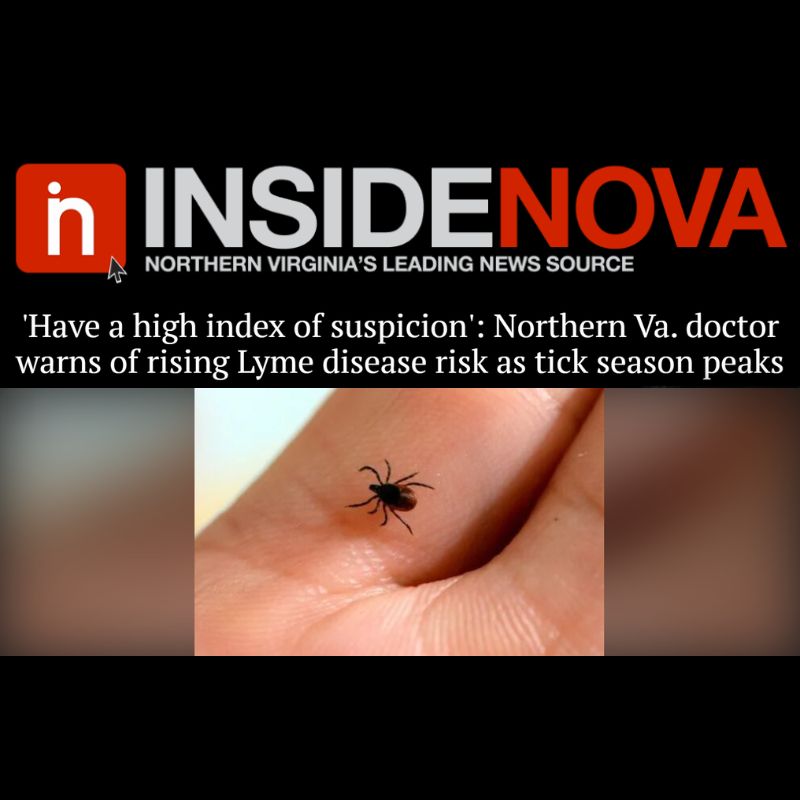
Ticks vary from the size of a poppy seed to a sesame seed, which makes them hard to see; and they prefer latching onto hard-to-see areas of the body such as armpits, groin, or scalp, so it’s likely you won’t notice their presence. This means, more often than not, you won’t know if you’ve been bitten, and by the time you start feeling sick – the incubation period for Lyme ranges from a few days to a few weeks – the tick will be long gone.
2) Lyme disease symptoms are very similar to other non-tickborne chronic illnesses.
Another factor that can make it difficult to obtain an accurate diagnosis is the similarity of symptoms that present with Lyme and other tickborne diseases (fever, chills, fatigue, headache, and joint aches) with those of many other non-tickborne illnesses, such as flu and other viral or bacterial infections.
If left undiagnosed and untreated, there can be detrimental effects on the body’s musculoskeletal and nervous systems. Symptoms such as chronic joint pain & headaches, extreme fatigue, and mood disorders can subsequently be misdiagnosed as fibromyalgia, chronic fatigue syndrome, or depression. This similarity of symptoms can cause delays in getting tested, and in turn causing delays in treatment.
There is also evidence indicating that chronic cases of Lyme disease (when symptoms persist after taking the typical short-term dose of antibiotics – also called Post Treatment Lyme Disease) contribute to a sustained inflammatory condition throughout the body that interferes with the healthy functioning of the nervous system. Known as Central Sensitization Syndrome, CSS has been implicated in several chronic illnesses and pain conditions, including fibromyalgia, chronic fatigue syndrome, depression, and Lyme disease.
Questions? Give Us a Call!
703-532-4892 x2
3) The patient may also be co-infected with another tickborne disease.
Ticks can carry multiple bacteria and parasites, including Babesiosis, Ehrlichiosis, Anaplasmosis, Bartonella, and Rocky Mountain Spotted Fever (also called Spotted Fever Rickettsiosis), and it’s not uncommon to see patients with multiple tickborne infections, but you won’t find them if you don’t look. In fact, studies suggest that ticks that carry Lyme can also carry another infectious agent that produces similar symptoms to those of Lyme disease, but requires different antibiotics and lengths of treatment. Because of this, it is extremely important for physicians to test for all forms of tickborne diseases and not just for Lyme.
4) Laboratory tests, while important, have room for improvement
Unless you’re among the small percentage of people who present the classic bulls-eye rash, a confirmed diagnosis is a little trickier. Blood tests, can get you another step closer to a diagnosis – and more importantly – a treatment. But before deciding to run diagnostic testing, a doctor must consider a patient’s physical symptoms and obtain a comprehensive history that assesses their personal exposure risk. For example, if an individual is experiencing some suspicious symptoms and often hikes or horseback rides, and/or owns a pet that spends time outdoors, a Lyme test is in order.
Unfortunately, the tests aren’t perfectly reliable, especially if the order includes testing for Lyme and other tickborne diseases. Different labs have varying levels of sensitivity, and some testing can miss some cases of infection. To accurately interpret test results your physician needs to understand the sensitivity and specificity – or, in other words, the limitations — of the lab testing they are ordering.
So what’s the takeaway?
Be your own healthcare advocate. The best medicine is prevention. Before recreating outdoors, cover your body in light-colored clothing. Use an insect repellant on yourself and make sure to treat your pet. Take the time to check yourself and your pet for ticks after spending time outdoors. If you do find a tick, do not throw it away. It can be sent to a lab, such as tickreport.com, and tested for multiple tickborne diseases. Having this information will allow you to request the proper treatment faster.
If you do notice Lyme-like symptoms, a helpful first step is the Horowitz Lyme Questionnaire. Developed by Lyme expert, Dr. Richard Horowitz, this test should not replace medical advice from your physician but can be a useful tool to determine the likelihood of Lyme or other tickborne illnesses. The only way to confirm or rule out a Lyme diagnosis is with a blood test.
Every individual is unique in their genetic makeup, medical history, and environmental exposures. Each of these factors can affect how Lyme disease manifests itself in your body. If some of your symptoms persist, even after you have been treated — don’t give up! Be your own advocate; keep asking questions and seeking answers until you find the right treatment options for you.
—
*This number includes both actual infections and patients that are treated presumptively but may not actually be infected.
We are here for you, and we want to help.
Our goal is to return you to optimal health as soon as possible. To schedule an appointment please call: 703-532-4892 x2
Reviewed May, 2026.
Could You Have Sleep Apnea? 3 Things to Consider
/in Conditions, Lifestyle, Sleep/by Gary Kaplan, DOObstructive Sleep Apnea (OSA) is a condition characterized by pauses in breathing while you sleep. It usually occurs when the soft tissue in the rear of the throat collapses and the airway is blocked. Throughout the night as an individual struggles to breathe, they repeatedly leave deep sleep and partially awaken as they gasp for air. However, when morning comes they are unaware of their sleep disturbance. According to the National Sleep Foundation, sleep apnea affects somewhere between 10-30% of adults.
Symptoms and risk factors
OSA symptoms may first be noticed by another person, like snoring loudly (although not everyone who snores has sleep apnea), gasping for air, and moments when you stop breathing during sleep. Other symptoms can include headaches, daytime sleepiness, and waking up with a dry mouth.
The risk factors for the disorder include being overweight, male, and more than 40 years of age; but the disorder can affect anyone (even small children whose breathing may be obstructed by enlarged tonsils). Unfortunately, most sufferers are unaware that they have the disorder, so it often remains undiagnosed. But ignorance is not bliss.
Untreated obstructive sleep apnea can cause a host of serious medical problems including chronic tiredness, headaches, memory lapses, irritability, weight gain, depression, increased sensitivity to body aches and pain, and for postmenopausal women, an increase in joint pain. It also places sufferers at a higher risk of developing heart disease, stroke, and high blood pressure.
Finally, excessive sleepiness has public safety consequences: The American Automobile Association (AAA) estimates that one out of every six (16.5%) deadly traffic accidents, and one out of eight (13%) crashes requiring hospitalization of car drivers or passengers is due to drowsy driving.
Diagnosis and treatments
If you suspect you may have sleep apnea, you shouldn’t delay an evaluation. A good place to start is the Epworth Sleepiness Scale. It asks Eight Questions to assess your risk – if your score is equal to or higher than 10, you are at high risk for sleep apnea and should consult your provider. At The Kaplan Center, to help us detect sleep apnea, as well as providing markers for quality of sleep, we prescribe our patients a recyclable Home Sleep Apnea Test called the WatchPAT ONE (scroll down for more information).
Although there is no cure, there are steps you can take to help you get a more restful sleep. Here are 3 things to consider doing now:
Again, if you think you may be suffering from sleep apnea or another type of sleep disorder, don’t put off seeking help. Your sleep is very important, and we are here to get you back on track. Call us at 703-532-4892, ext. 2 to make an appointment.
WatchPAT® ONE for Diagnosing Sleep Apnea and Other Sleep Disorders
WatchPAT ONE Home Sleep Apnea Test (HSAT) can be a valuable tool to help us monitor if there are adequate amounts of Deep and REM sleep, apnea episodes, oxygen and heart rate, snoring, movement, and more.
Patients benefit from:
For more information about sleep apnea, please visit the National Institute of Neurological Disorders & Stroke website.
This article was originally published in March 2016. It was reviewed and updated in May 2023.
We are here for you, and we want to help.
Our goal is to return you to optimal health as soon as possible. To schedule an appointment please call: 703-532-4892 x2
References
National Sleep Foundation
Owens, J.M., Dingus, T.A., Guo, F., Fang, Y., Perez, M., McClafferty, J. & Tefft, B.C. (2018). Prevalence of Drowsy Driving Crashes: Estimates from a Large-Scale Naturalistic Driving Study (Research Brief). Washington, D.C.: AAA Foundation for Traffic Safety.
Li, M., Zou, X., Lu, H. et al. Association of sleep apnea and depressive symptoms among US adults: a cross-sectional study. BMC Public Health 23, 427 (2023). https://doi.org/10.1186/s12889-023-15358-8
Odai T, Terauchi M, Umeki H, Miyasaka N, Somekawa Y. Sleep apnea in postmenopausal women is associated with joint pain severity and fatigability: a cross-sectional study. Menopause. 2022 Jun 1;29(6):680-686. doi: 10.1097/GME.0000000000001974. PMID: 35231006.
Gomase VG, Deshmukh P, Lekurwale VY. Obstructive Sleep Apnea and Its Management: A Narrative Review. Cureus. 2023 Apr 10;15(4):e37359. doi: 10.7759/cureus.37359. PMID: 37182079; PMCID: PMC10174073.
RMIT University. (2019, January 31). Sleep apnea creates gaps in life memories: People with sleep apnea struggle to remember details of memories from their own lives, putting them at risk of depression. ScienceDaily.